Page 1 of 1
A regular dodecagon
Posted: Thu Mar 31, 2016 9:02 pm
by Gob
Pocket money may look a bit different this time next year because the £1 coin is changing.
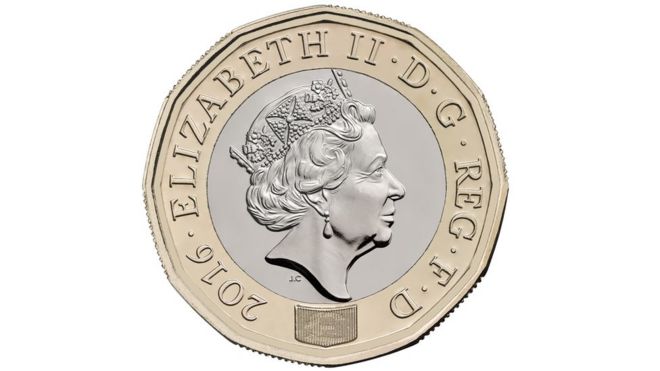
The new one will have 12 sides instead of a smooth, rounded edge.
It's the first time the pound coin has been changed in more than 30 years.
The Royal Mint, who produce all of our coins, say the new design will make pound coins harder to illegally copy.
The coins will not be available to use until March 2017.
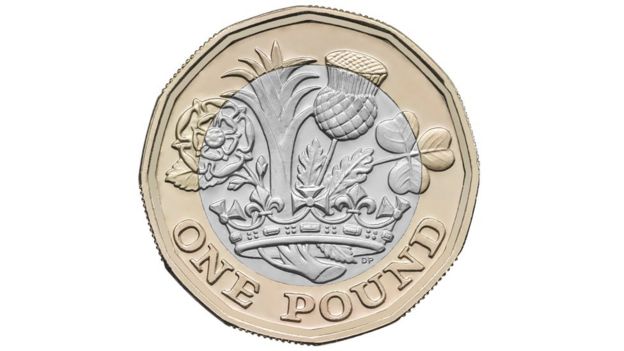
But they've already started to be made by the Royal Mint with 4,000 coins being created every minute.
The current coins will not be out of date as soon as the new ones are released. There will be a six month period when both the old and the new pound coins can be used.
Re: A regular dodecagon
Posted: Thu Mar 31, 2016 10:00 pm
by Burning Petard
What is the theory behind removing the current coin from circulation? On this side of the pond, US postage stamps, and coins, and paper money issued by the national government are all good and legal, no matter how old. Stamp collectors from time to time circulate stories of some very old sticker worth thousands of dollars in the collector market and used to mail an ordinary letter by some family member who found the thing stuck in a book of similar colored paper stickers in an old trunk. Same with old US coins and paper bills. They are still valid at face value. The steel penny dated 1944 is still good for commercial exchange at one tenth one current dime with no silver content--but worth lots more to a collector.
snailgate
Re: A regular dodecagon
Posted: Fri Apr 01, 2016 12:40 am
by MajGenl.Meade
Maybe it has to do with vending machines.... anyway, thanks for heads up, Gob. I've got some round pounds and appears best to get rid of them this year then. Not unhappily so because we're working to return to live in South Africa (via England) some time between August and October.
Re: A regular dodecagon
Posted: Sat Apr 02, 2016 9:04 pm
by Jarlaxle
Burning Petard wrote:What is the theory behind removing the current coin from circulation? On this side of the pond, US postage stamps, and coins, and paper money issued by the national government are all good and legal, no matter how old. Stamp collectors from time to time circulate stories of some very old sticker worth thousands of dollars in the collector market and used to mail an ordinary letter by some family member who found the thing stuck in a book of similar colored paper stickers in an old trunk. Same with old US coins and paper bills. They are still valid at face value. The steel penny dated 1944 is still good for commercial exchange at one tenth one current dime with no silver content--but worth lots more to a collector.
snailgate
Actually, I recall the steel pennies are worth very little to a collector...but a COPPER 1943 penny is valuable.
Re: A regular dodecagon
Posted: Sat Apr 02, 2016 9:34 pm
by Burning Petard
A steel 1944 is worth plenty. Less than 50 made. Probably some where north of $70,000.
http://cointrackers.com/coins/13593/194 ... eat-penny/
Re: A regular dodecagon
Posted: Sat Apr 02, 2016 11:03 pm
by Bicycle Bill
Until the government decides that it made a mistake and wants it back, like happened a couple years ago with an aluminum cent:
http://www.coinworld.com/news/us-coins/ ... t.all.html
And they finally bullied the guy into giving it up:
http://www.10news.com/news/rare-coin-re ... tates-mint
 -"BB"-
Re: A regular dodecagon
Posted: Sat Apr 02, 2016 11:11 pm
by Gob

The $1000 bill printed in 1891 depicting Major General George Gordon Meade on its face was sold for $2.5 million in April 2013, in part due to its rarity and age, and partly due to the hands it had passed through during history, making it one of the world’s most expensive banknotes ever sold.
Re: A regular dodecagon
Posted: Sun Apr 03, 2016 3:44 am
by datsunaholic
Not quite. No government mistake there. The 1974-D Aluminum cent was stolen by a mint employee, if the article is correct, which was handed down to his son who tried to sell it. The government may or may not have authorized the striking of them, but never authorized the release. If they allowed employees to create their own "oddities" for profit (like creating a 2009 Lincoln Memorial cent) it's no different from counterfeiting, except they'd also be misusing government property (and stealing the material on top of that).
Re: A regular dodecagon
Posted: Sun Apr 03, 2016 4:23 am
by Bicycle Bill
My understanding, Datsun, is that the Mint stamped out a couple thousand of those, many of which were passed out among the then-seated members of Congress when the proposal to make the one-cent coins out of aluminum was under consideration. I highly doubt that they made each and every member of the congressional delegation sign for these coins, and scrupulously made sure that each and every one they had handed out were returned upon request. I contend that this would constitute a release — albeit a limited one — of the coins, similar to the way bullion coins (like the .999 fine silver "Silver Eagle" coins) or the various commemorative
(illustration below) and/or proof sets bearing an "S" for the San Francisco mint are produced and distributed but not put into general circulation.

If they had wanted to make sure that these sample specimens would not be mistaken for legal tender/coin of the realm then maybe they should have substituted the word "replica" or "sample" for the word "Liberty" on the coin. It would not have affected the significant features of the coin nor the concept of being struck from aluminum, but still would have been able to be easily distinguished from a legitimate piece of coinage.
Although when you consider that there are various niches of collectors that specialize in casino chips, food stamp chits, and plastic or metal bar tokens, I suppose someone would have still squirreled these away until such time as they thought there might be a potential buyer for it.
-"BB"-
Re: A regular dodecagon
Posted: Sun Apr 03, 2016 6:32 am
by datsunaholic
They made quite a few 1974 Aluminum cents and handed them out to Congress. Yes- in Philadelphia, bearing no mint mark. Hence the (so far) legal "Tovar Cent" which was supposedly dropped by a congressman who told the retriever he could have it.
The 1974-D one was not amongst those. The Government claims it has no record of Aluminum cents being struck in Denver, which is where the 1974-D Aluminum cent came from. H.E. Lawrence was an assistant superintendent of the Denver mint. So there really isn't a question of where it came from, but a person in H E Lawrence's position would have known that taking any coin from the mint, experimental or not, was illegal. His son probably didn't know but waited until 2013 ( HE Lawrence died in 1980, the same year he retired from the mint) to sell it. The coin dealer that bought it, OTOH, would have known or at least had a suspicion that it might not be legal to possess, and sure enough that's what happened.
This has happened before- but with a far more valuable coin. The 1933 Double Eagle, a coin that was legally struck but never issued and all but 2 were supposed to have been destroyed. 20 (known) ones were "saved" and sold to Israel Swift. Of those, 9 were recovered and destroyed between 1945-1952. One ended up in Egypt (since returned, authenticated due to interesting circumstance, and sold again- it's the only one legally in private hands), and the Swift family still had 10 of them until they turned them over in 2005.
https://en.wikipedia.org/wiki/1933_double_eagle
Gold coins WERE demonetized in 1933 under Executive Order 6102 and the Federal Reserve Act of 1934.
They didn't alter the dies for the aluminum cents because they used production dies for the test. Dies aren't cheap- they have to last hundreds of thousands of strikings, so making one die for a small test run is a waste of money. Then again, the mint could have sold the test articles as real money for a LOT more, turning a profit. It's not like they don't already do that with proofs and "uncirculated" coins. I have a 2012 Quarter with an "S" mint mark, which was never released into "Circulation" but you could buy them in bags or rolls (at a premium). Occasionally they do end up in circulation (which may or may not destroy their value, as uncirculated collector coins aren't uncommon but circulated ones are).