I agree with
MajGenl.Meade that the BBC is wrong on number 3.
"I'd like to introduce you to my sister Clara, who lives in Madrid, to Benedict, my brother who doesn't, and to my only other sibling, Hilary." Which of the following is correct?
* * *
He's male. The absence of a comma before "who doesn't" implies that there are other brothers. A comma after "my brother" would mean that there was only one brother.
The sentence, ungrammatical as it is, plainly does not mean that "my brother who doesn't" is someone other than Benedict. To mean that, the sentence would have to read:
"I'd like to introduce you to my sister Clara, who lives in Madrid, to Benedict, to my brother who doesn't, and to my only other sibling, Hilary."
Parallelism requires "to A, to B, to C, and to D." The phrasing "to A, to B, C, and to D" is gibberish.
Besides violating parallelism, the sentence also bungles appositives. That matters, because the BBC's answer hinges on the lack of a comma after "my brother" -- a comma which would turn would turn "my brother" into an appositive separate from "who doesn't".
But "my brother who doesn't" is an appositive itself.
See, e.g., the fourth example
here: In the sentence "The insect,
a large, hairy-legged cockroach that has spied my bowl of oatmeal, is crawling across the kitchen table," the entire emphasized phrase is an appositive. (Emphasis in original.)
As correctly stated in the linked article, "a nonessential appositive is
always separated from the rest of the sentence with comma(s)." (Emphasis in original.) The phrase "my brother who doesn't" is separated from the rest of the sentence by commas, and there is no comma within that phrase. Therefore, that phrase must be an appositive referring to "Benedict," and it carries no implication at all that there are other brothers.
And it especially risible that the BBC's answer should depend on the punctuation of an appositive, because the BBC mispunctuates the first appositive in the sentence: The sentence should begin "I'd like to introduce you to my sister
, Clara, who ...."
(For those of you who think that "my sister Clara" is correct: If that is so, then "my only other sibling Hilary" must also be correct. But despite having put no comma before "Clara" the BBC put a comma before "Hilary". The BBC cannot have it both ways.)
The BBC's having botched parallelism, misunderstood appositives, and misapplied the very pseudo-rule on which it erroneously relies dissuaded me from taking the rest of the quiz. I prefer to be tested on grammar by people who actually understand it.


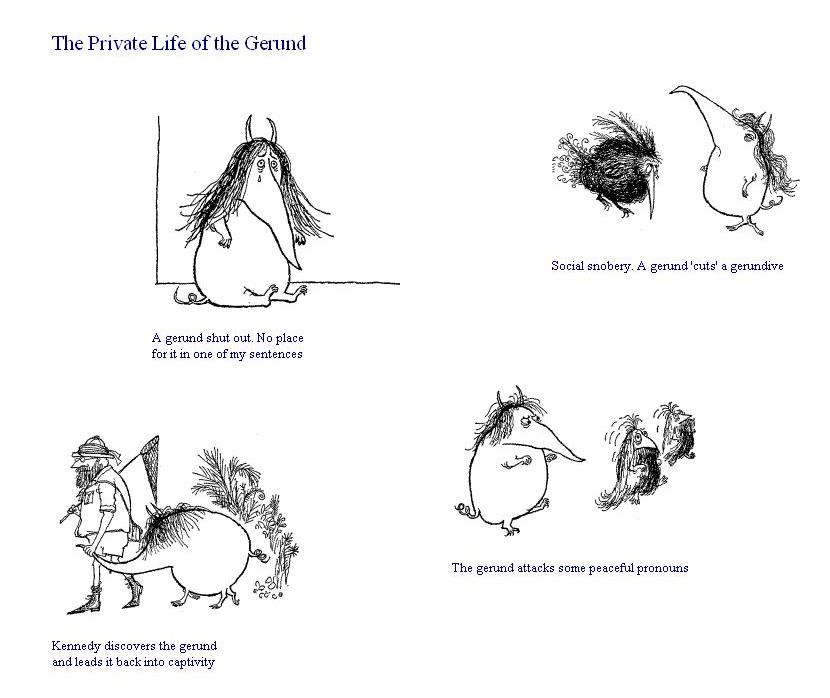
 I know nothing of gerunds and "may or might" defeated me.