Obama Meets With Putin....
Posted: Thu Oct 01, 2015 8:16 pm

Oh, sorry, wrong picture:

Well, it was an understandable mistake...
have fun, relax, but above all ARGUE!
http://www.theplanbforum.com/forum/
http://www.theplanbforum.com/forum/viewtopic.php?f=3&t=14288
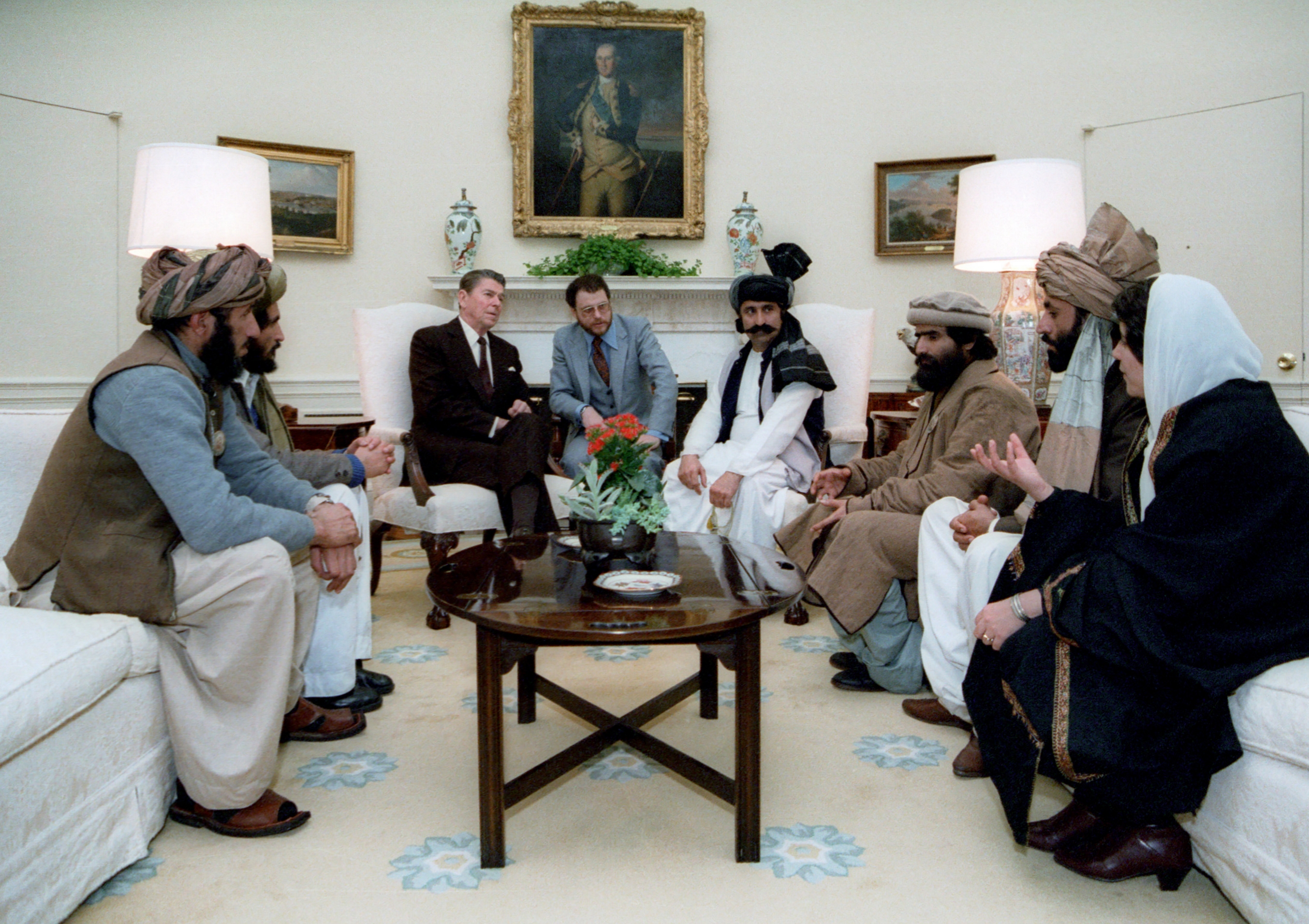

dales wrote:Here's another......................because of this boob, North Korea now has nuclear weapons.
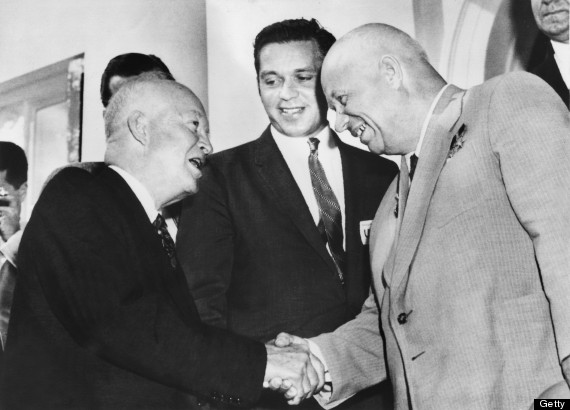
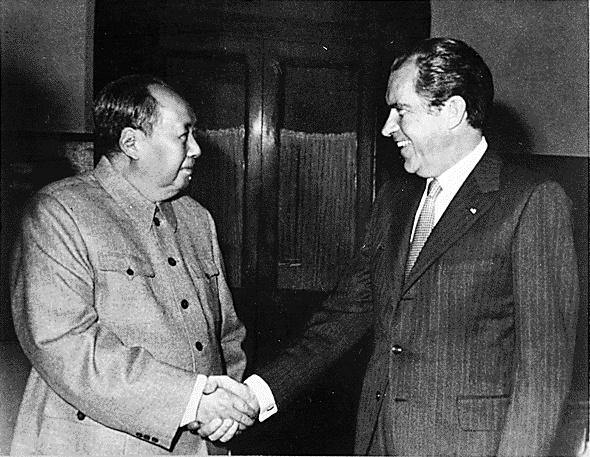
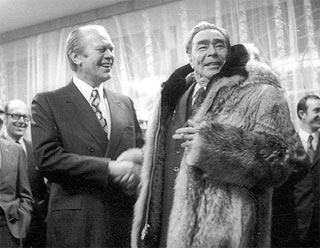

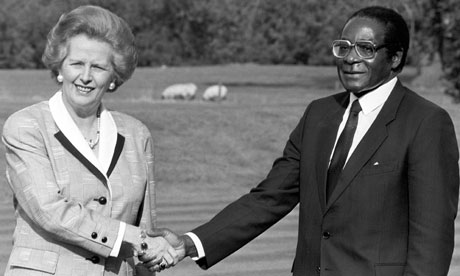

 It would be like if someone had gone to John Gotti and asked him what is intentions were.
It would be easy to get the impression from media coverage that Putin's decision to intervene militarily in Syria is some kind of genius strategic move — a bold and brilliant gambit that will weaken the US in the Middle East, or at least dramatically limit its influence in the region. Headlines this week have blared that Putin has "blindsided" Obama, that Putin is now "controlling the game" in Syria, and that Obama is "humiliated" as Putin "resets the Middle East."
But as Jeremy Shapiro, a senior fellow in the Brookings Institution's Project on International Order and Strategy, explained to me, the truth is far different. If Russia did manage to "blindside" the Obama administration, he argues, that's only because the Russian intervention is so incredibly stupid that it took the US by surprise that Putin would actually do it. And while Putin's actions may be bold, that doesn't mean they'll be effective, much less worth their costs.
In fact, Shapiro argues, if the US is going to take a cue on its Syria policy from a despotic foreign leader, it shouldn't be Putin, but Napoleon, who once famously warned, "When your enemy is making a mistake, do not interrupt him."
Below, Shapiro explains why Putin is making a mistake in Syria, why the US should refuse to be drawn into a "pissing contest" on foreign policy, and what would really need to happen to bring Syria's civil war to a close.
[/size]Russian President Vladimir Putin, in his Monday address to the United Nations General Assembly, described Russia's military intervention in Syria in the same world historical terms that every Russian leader has used since 1941: as a symbolic extension of the fight against Nazi Germany. Putin even called for world leaders to join him in a modern-day "anti-Hitler coalition" against extremists, particularly ISIS.
For all Putin's grand rhetoric, though, his immediate aims in Syria are quite clear, and not quite as noble as saving the world from fascism. Putin's goal, first and foremost, is to bolster Syrian leader Bashar al-Assad's forces to help them prevail in Syria's war. "There is no other solution to the Syrian crisis than strengthening the effective government structures and rendering them help in fighting terrorism," Putin told 60 Minutes on Monday.
And, as perhaps a secondary goal, he's hoping to recruit the world and especially the West to join Russia in a grand coalition against extremists in Syria — thus bringing Russia back into the fold of respected nations and absolving it of its sins in Ukraine.
Both of these goals are doomed, and not least because they are diametrically opposed.
At best, Russia will merely entrench the status quo in Syria, worsening conditions without fundamentally altering them, and miring what is presently a small but politically embarrassing Russian force in a Mideast quagmire. At worst, this will deepen the very problems that Putin is hoping to solve, exacerbating both his own isolation and the armed movement, extremist and non-extremist, encircling Assad in Syria.
1) This risks bolstering the very forces Putin most wants to weaken: anti-Assad jihadists.
Let's get one thing out of the way right now: Putin has represented his intervention as targeting ISIS, and Russia claimed its first airstrikes on Wednesday targeted the group, but the evidence very strongly suggests that Russia is in fact bombing non-ISIS opposition groups in Syria.
That's not surprising: Putin is there to help Assad, and Assad's main enemies are the non-ISIS opposition groups. Those groups also happen to be fighting ISIS. So Putin is so far not bombing ISIS, but rather ISIS's enemies.
Some of those opposition groups are moderate, including US-backed groups, and others are extremists, including the local al-Qaeda branch, Jabhat al-Nusra. Putin will likely bomb all of them. But it is the extremists who may ultimately stand to benefit.
Jihadist groups in Syria, including ISIS and Jabhat al-Nusra, are competing against one another for ideological legitimacy. Whichever group can best position itself as representing Sunni jihadism, the thinking goes, will get more recruits and donations, and thus win more territory on the battlefield.
If you are an extremist group looking to claim the mantle of global jihadism, then being able to position yourself as combating not just Assad but a foreign invader — and a Christian empire at that — is pretty attractive.
In 1979, the Soviet invasion of Afghanistan inspired a call to arms from across the Muslim world to fight the non-Muslim invaders. So did the US invasion of Iraq in 2003. This Russian intervention is much, much smaller, and the reaction will likely be smaller as well, but jihadist groups may still be able to exploit it.
2) Assad's war is still unwinnable. Putin is doubling down on a losing bet.
If Putin's goal is to prop up Bashar al-Assad, then contributing Russian airstrikes and attack helicopters (the latter of which are present in Syria but don't appear to have been used yet) will help Assad on the margins, but they won't change the fundamental calculus of the war. It is a war Assad cannot win; he can only stave off losing.
For one thing, this is likely to exacerbate outrage against Assad across the region, redoubling both the popular Syrian uprising and the wider jihadist movement. For another, the Putin-Assad coalition, joined by Iran and Hezbollah, is dominated by Shias and other non-Sunnis, which will deepen the sectarian dynamics of the war. Given that Assad represents a sectarian minority in Syria, the more sectarian the war becomes, the more impossible it becomes for him to win.
When Western leaders say that Assad has lost all legitimacy, that's not just rhetoric (even if they have little intention of doing much about it): Assad has lost the consent of Syria's Sunni Arab majority, not to mention ethnic Kurds and other groups, to accept his rule. Even if he could somehow defeat ISIS and all Syrian rebels — which would take a whole lot more than a couple dozen Russian aircraft — there's little reason to think that any number of atrocities will impose order in Syria.
So why is Putin doing this? As Vox's Amanda Taub has written, Syria is the sum of many of his greatest fears: fear of anarchy, fear of populist uprisings, fear of Western meddling, fear of any authoritarian regime's downfall, and fear of an ever-encroaching global chaos — all forces that Putin believes could one day be turned against him. What he's pursuing is not a brilliant, grand strategy of expanding Russian power, but rather a desperate effort to stave off these forces that so frighten him.
This is why, as Andrew Roth writes at the Washington Post, Putin appears to have no actual strategy, no long-term plan, no endgame. He is acting out of fear and reactiveness. He does not hold a winning hand.
3) This will not rally the West behind Russia, but rather will isolate Russia further.
A number of Russia watchers expected that Putin, this week at the United Nations, would try to use his Syria intervention as leverage with the West to get Russia readmitted into the ranks of respectable powers, from which it had been expelled over its invasion of Ukraine.
And indeed, Putin this year gave his first UN General Assembly address since 2005 and made multiple requests for a meeting with President Obama, which he got. He used his UN address to lecture the West but also invite it into his grand coalition to fight ISIS.
But the US and other Western countries have not welcomed Putin's Syria adventure, and in fact have condemned it, casting him as part of the problem. They see that he is propping up Assad, who is the primary cause and driver of Syria's war, and they see that he claims to bomb ISIS but in fact bombs the rebel groups who fight ISIS (groups that also challenge Assad).
The response from the Obama administration has generally been to accuse Russia, as Defense Secretary Ashton Carter put it, of "pouring gasoline on the fire." Carter added, "I think what they’re doing is going to backfire and is counterproductive." Not the words of a potential partner in Putin's "anti-Hitler coalition."
It is possible that the US will come to grudgingly tolerate Russia's military force in Syria. Secretary of State John Kerry seemed to inadvertently signal as much in a bizarre gaffe of a press conference with his Russian counterpart. Still, do not confuse this with success for Putin. He is not seeking merely grudging Western tolerance of his Syrian intervention, but rather hoping that this intervention will be so welcomed and appreciated as to erase the Russian sins that got him globally ostracized and isolated.
That he's failing in this is not a surprise: Putin's two goals, of boosting Assad while currying favor with the West, are incompatible and opposed to one another. Even if he could achieve one of those goals, it would set back the others; handing Assad big battlefield victories would outrage the West. At the same time, actually getting Western support would require attacking ISIS, which would be bad for Assad, who relies on (and tolerates) ISIS as a means to distract the opposition groups that really threaten his regime.
Putin's mistake is twofold. He misread the West: Seeing Western leaders as unwilling to back the Syrian opposition and focused on confronting ISIS, he believed he could force them to back Assad. And he was trapped in his own propaganda bubble, perceiving all Syrian opposition as indistinguishable from ISIS and Assad as a peacemaker.
But everyone can see that Russia's intervention is bad for Syria, not good for it, and so far the Russians are not even fighting ISIS. What Putin believed would at least earn him some begrudging acceptance and cooperation from the West has, thus far, only deepened his isolation.
4) The Russian public is skeptical of Putin's Syria adventure.
So, to review, Putin's Syria intervention seems likely to fail in both of its objectives — advancing Assad in Syria's war and getting Russia back into Western good graces.
It could also cause him a very serious problem that's not getting much attention: It may eat into his popularity at home. For Americans, declining poll numbers sound like only so big of a deal. But for Putin, a strongman authoritarian, popularity is essential to maintaining his legitimacy and perhaps his very hold on power.
A recent poll by Moscow's Levada Center shows that only a small minority of Russians support giving Bashar al-Assad direct military support. Only 39 percent of respondents said they supported Russia's policy toward the Assad regime. When asked what Russia should do for Assad, 69 percent opposed direct military intervention. A tiny 14 percent of respondents said that Russia should send troops or other direct military support to Syria.
That's a pretty striking contrast from the overwhelming public support that Russians gave to Putin's efforts in Ukraine.
It's clear that Putin is taking this problem seriously. In what seems to be an attempt to shore up public opinion among Russians who are worried about casualties in a faraway war, the Kremlin has already promised that only volunteers, not conscripts, will be sent to Syria, and that the military intervention will consist only of airstrikes.
Russia's economy is already struggling, and a new war will be an expensive additional burden. If Russia's presence in Syria makes its forces a target of terrorist attacks there, or, worse, if it coincides with attacks at home, that could damage public opinion even further.
To be clear, none of this means that Syria will be enough to overcome Putin's reportedly sky-high approval, nor does it mean that one unpopular Mideast adventure is going to bring the downfall of the Putin government. But the point is that he can't afford to gamble with his public support. Putin's hold on power, as solid as it might look from the outside, isn't. It's beset by a number of problems and, at the moment, is premised in large part on his most important asset: overwhelming popular legitimacy.
Russian elites are said to be getting impatient with Putin, who got many of them slapped with sanctions. That leaves Putin reliant on public support to keep himself in office; a hit to his poll numbers is also a hit to his basic legitimacy. That's a precarious position to be in, particularly given Russia's current economic downturn. No single unpopular policy is going to bring it all crashing down, but the point is that he's not in a position to go gambling with his popularity, and yet he's just done exactly that.
An addendum:
- So does this all mean that, because Russia is doomed to fail in Syria, that this is good news for America or for Syria or for anybody else? It does not.
The net result of this will be failure for Russia, but it will also be a worsening of conditions for Syrians. There will be more bombs falling on Syrian families. There will be a deepening of the preexisting sectarian divisions that help drive this war and will make any peace, whether it comes in a year or a decade, that much harder. Syrian civilians, as always, will bear the greatest burden.
There is an odd tendency in Washington to see any Russian success as bad news for America and any Russian failure as good news. This was a logic that helped drive any number of Cold War proxy conflicts, some legacies of which are still with us. The likelihood of Russian failure in Syria should not be cause for schadenfreude, much less celebration, by anyone.
So I guess whomever is in charge in 10 years gets to take the blame for todays Iran nuke agreement.But its' just easier to blame Carter than to see who really dropped the ball and who was in charge at the time.

viewtopic.php?f=3&t=14131&p=176340&hilit=+Syria#p176340Sue U wrote:You still haven't answered my very simple question: How is America in any way responsible for the Syrian civil war? Be specific as to cause and effect.Lord Jim wrote:[... blah blah blah blah blah ... ]
(As to the historical issues, Syria's current problems have virtually nothing to do with either the Balfour Declaration or the partition of the Ottoman Empire.)
Here's an exercise, Jim:
1. Identify the U.S. national interest(s) in Syria.
2. Identify the U.S. national interest(s) in the Syrian civil war.
3. To the extent these may be different, explain how to effectively advance each and what the costs v. benefits are, both economically and in American lives.
4. Describe how U.S. national interests conflict and/or coincide with those of all other parties/factions in Syria, in the region, and globally.
5. Describe the ultimate result to be obtained.
6. Estimate the likelihood of success in achieving that result and over what period of time.
7. What are the likely consequenes of failure at every stage, and how are they going to be handled?
8. How much of any of the above will be tolerated (let alone supported) by the American people, and what is the likely effect on domestic politics?
The U.S. is not required to pay any price in Syria, and by the way our engagement in 2013 eliminated the use and most if not all of the stockpiles of the Syrian government's chemical weapons. And who is it exactly that you think is actually fighting ISIS/al-Qaeda/al-Nusra et al in Syria? Are you now saying we should have been aggressively backing the Syrian government all along? Make up your mind.Lord Jim wrote:The price the US will now have to pay is already much higher than if we had been properly engaged three years ago; (when we could have kept ISIS in check in Iraq with a force that would have kept the Sunni militias in the fight, and in Syria with robust support for the non-sectarian rebel forces) and the more timidly we behave now the higher the ultimate price will be.
You couldn't have justified the US entry into WW II using the sort of criteria you are insisting on...Estimate the likelihood of success in achieving that result and over what period of time.
7. What are the likely consequenes of failure at every stage, and how are they going to be handled?
That ranks up with your assertion that Turkey and the Gulf States think the Iran nuke cave-in is just peachy, on the Total Horseshit Meter...by the way our engagement in 2013 eliminated the use and most if not all of the stockpiles of the Syrian government's chemical weapons.

I don't think that's a given, but clearly we have to determine how to deal with iran in the post-agreement period and constructively engage them toward a more permanent settlement (or even, perhaps, a more open relationship between countries). And if a leader does not do that, I will blame him or her, not the architects of this agreement who hopefully enabled them to do so.or if the agreement was followed, Iran can have nukes in 10 years. (at least that's how I understand what little I know about the agreement)
So that will not be the fault of the CIC in 10 years time. Maybe he or CIC's from now til then can get a "better" agreeement?
I don't understand?And if a leader does not do that, I will blame him or her, not the architects of this agreement who hopefully enabled them to do so.