SpaceX is a very exciting company. In addition to the Dragon V2 Capsule, they've successfully tested a reusable rocket the Falcon 9-R, with the thrust capability to deliver the astronauts to the low earth orbit required for Space Station missions. And by "re-usable" I mean the thing will fly back to the pad it launched from where it can be refueled and used again within hours. Here's video of the initial test flight.:Boeing, SpaceX win new 'space taxi' contracts
KENNEDY SPACE CENTER — The next generation of America's manned spacecraft will be produced and operated by the private space-transportation companies Boeing and SpaceX, NASA said Tuesday.
The announcement means astronauts could be sent into space from Florida within three years, the first American-based space rides since NASA ended its shuttle program in 2011.
"I am giddy today, I admit," said NASA Administrator Charles Bolden. "I couldn't be happier."
SpaceX CEO Musk speaks after unveiling the Dragon V2 spacecraft in Hawthorne
NASA announced a set of multiyear contracts worth $6.8 billion to hire Boeing Space Exploration of Houston and Space Exploration Technologies [SpaceX] of Hawthorne, Calif., to finish developing their new spacecraft and have them ready to taxi four American astronauts at a time to and from the International Space Station by 2017.
Both companies will be launching from the Cape, though likely from pads at Cape Canaveral Air Force Station rather than from the NASA facilities at Kennedy Space Center.
Boeing will be using its new CST-100 vessel, a traditional-looking capsule reminiscent of the Apollo days. The company gets $4.2 billion to finish developing and certifying its program, do a test flight with one NASA astronaut and launch up to six actual taxi flights.
SpaceX will use its Dragon V2, a more modern-looking design based on its Dragon capsule that has been ferrying NASA supplies to the space station for the past two years. SpaceX gets $2.6 billion to do all the same things as Boeing. The difference in price reflects that SpaceX requested less money, said Kathy Lueders, NASA commercial crew program manager.
NASA officials announced the new deals while describing a future in which low-Earth-orbit flights will be expanded to private companies and eventually to private citizen astronauts. There also are expectations that other private space companies will develop low-Earth-orbit laboratories and other modules that would need astronauts.
"This really validates our plan at KSC to have a true commercial port," said KSC Director Bob Cabana.
cComments
The last time astronauts went to space from Kennedy — or anywhere in America — was the final mission of space shuttle Atlantis, which came back to Earth on July 21, 2011. Since then American astronauts have been going to and from the space station aboard Russian Soyuz capsules. NASA is paying Russia $1.7 billion to provide that service from 2012 to 2017.
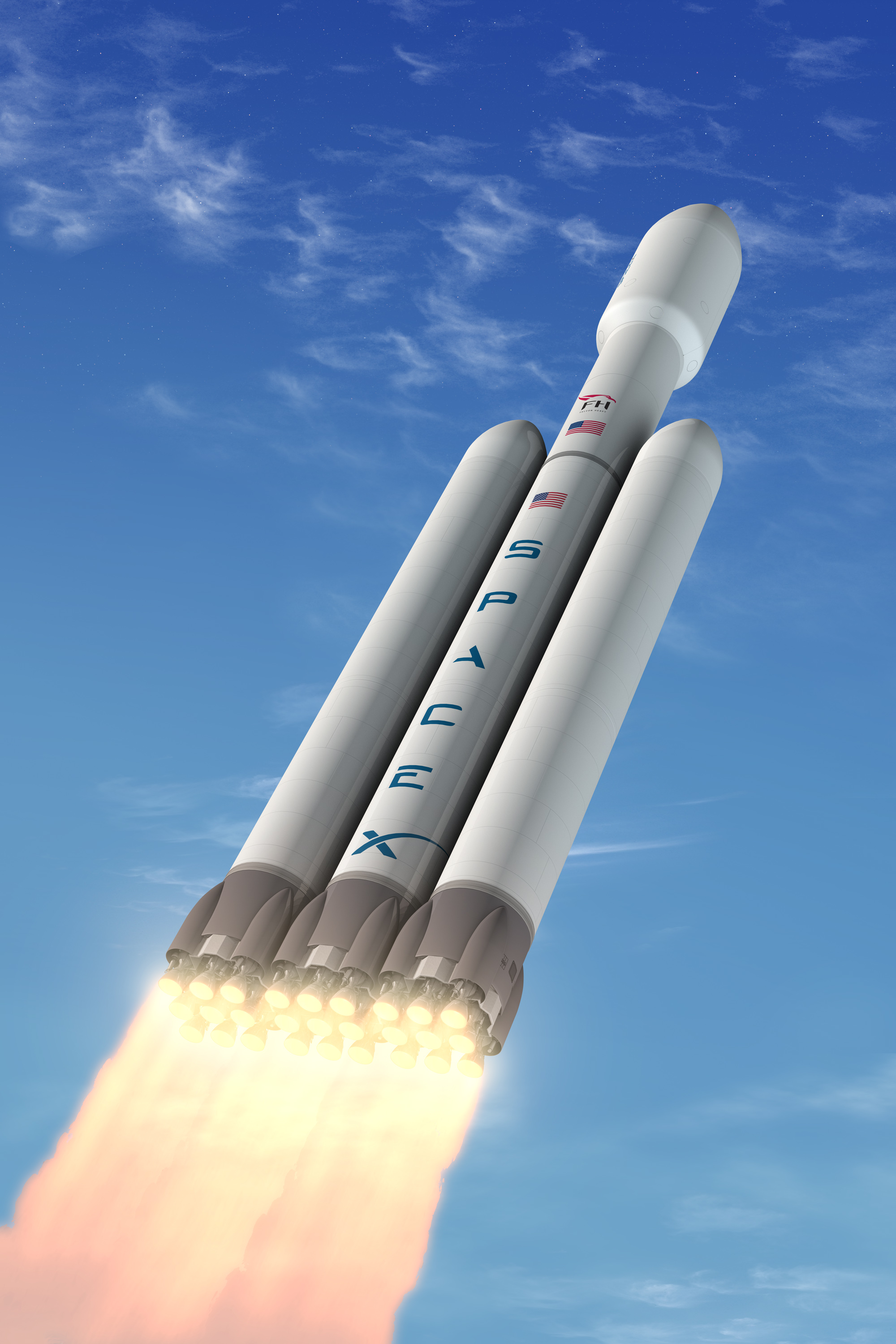
And what's even cooler, the same company is developing an inexpensive heavier rocket (the most powerful rocket since the Saturn V) capable of carrying large payloads into higher orbit that can be assembled for manned missions to Mars, asteroids, etc.
http://www.spacex.com/falcon-heavy