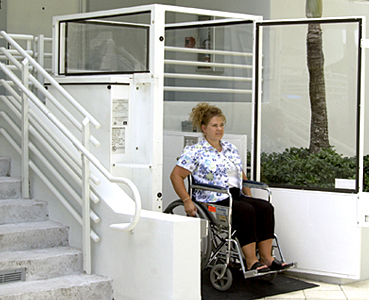
There are some things, that intuitively and through the application of common sense that anyone with an IQ above room temperature can rule out without the need for "experimentation". (this maze-ramp is clearly one of them.)
Obviously not: that ramp got built...QED.
Ah, but you're being charitable and assuming that IQs above room temperature were involved...
That's not an assumption I'm prepared to make...
We also don't know if there was even a contractor involved; my guess would be that (especially this being the UK) that this was probably some sort of Dept. of Public Works project... (That would explain the complete lack of interest in the cost.)
Here's my theory of how this went down:
The starting point for this fiasco is probably what oldr was talking about; that there must be some local code requirement regarding exactly what the incline level of an access ramp must be. (In fact it appears that this incline may be built into pre-made ramp sections; as I look at the contraption, all the sections appear identical.)
I don't believe there was ever any thought process involved where somebody sat down and actually designed this thing. What probably happened is this:
The work crew is sent out with the address and the assignment to build an access ramp, something which they have done before. Maybe in some situations to build the ramp they had to zig zag it a couple of times, so they are familiar with that procedure.
When they get there nobody stops to think, "Hey wait a minute, given how high up off the street this house is, this really isn't the best way to do this. I should get one the supervisors out here to take a look at this before we even get started."
No, that never happens, and why should it? These guys aren't paid to think and make judgements; they're paid to build ramps. How much it costs, how it looks, and the consideration of alternatives are not in their job description.
So they just do what they were told and go ahead and take a week and use all the materials they need and build the ramp using the techniques they were trained to use.
The lesson that should be learned from this is a lot more than "this isn't a cost effective or even minimally intelligent way to provide handicapped access in a situation like this."; as I said, that should have been recognized at the outset, without any need to even begin the project.
The
really important lesson to be learned and applied here, is that whoever is in charge on-site for a public works project needs to be trained to spot situations that might not be appropriate for the work order they were given, and encouraged when they encounter such situations to raise a red flag with higher ups before proceeding.
I believe that if that had happened in this case, this expensive embarrassment could have been avoided.
I don't think that the problem here was that somebody thought up a stupid and needlessly expensive way to do this; I think the
real problem was that a stupid and needlessly expensive result was achieved due to the lack of any thought at all.


 )
)