http://www.vox.com/2014/7/8/5880931/the ... ut-bicycle
"... Descriptions of bicycle face varied: some implied it could be a permanent condition, while others maintained that, given enough time away from a bicycle, a person's bicycle face would eventually subside.
Explanations of the root cause of bicycle face also vary. Shadwell, for one, argued that the particular difficultly of keeping a bicycle balanced causes it, but that the accompanying overexertion also plays a role. Some other publications felt that violating the Sabbath by riding bicycles on a Sunday was ultimately to blame. Most publications agreed that bicycle face could strike anyone, but women were disproportionately affected. ..."
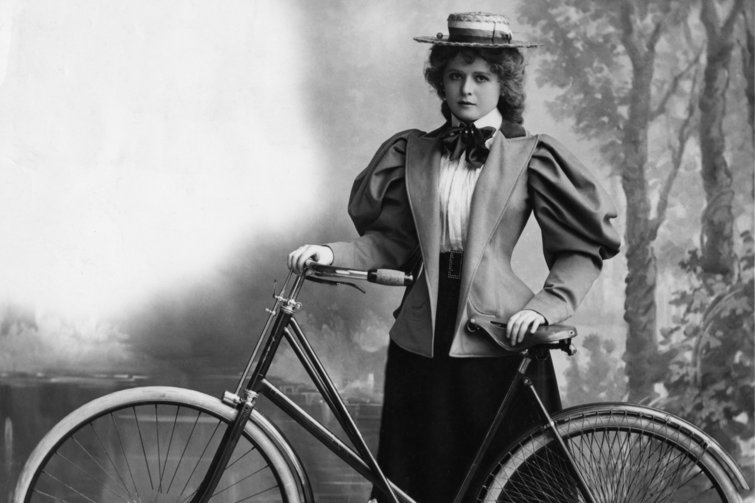
"... in 1890s Europe and the US, bicycles were seen by many as an instrument of feminism: they gave many women a measure of increased mobility, began to redefine Victorian ideas about femininity, and were eagerly taken up by many women active in the suffrage movement. Bikes helped stoke dress reform movements, which aimed to reduce Victorian restrictions on clothes and undergarments so that women could wear clothes that allowed them to engage in physical activities.
"in the 1890s, bicycles were seen by many as an instrument of feminism"
As Munsey’s Magazine put it 1896: "To men, the bicycle in the beginning was merely a new toy, another machine added to the long list of devices they knew in their work and play. To women, it was a steed upon which they rode into a new world."
All this triggered a backlash from many (male) doctors and onlookers, who cited all sorts of reasons to dissuade women from riding bikes. In general, they argued, bicycling was an excessively taxing activity, unsuitable for women — it would not only lead to bicycle face, but exhaustion, insomnia, heart palpitations, headaches, and depression. ..."
yrs,
rubato