Page 1 of 2
The big conversation
Posted: Sun Jul 19, 2015 11:21 pm
by Gob
The Prime Minister wants the country to engage in a "big conversation" about gulls following recent attacks.
David Cameron said it was a "dangerous" issue for a prime minister "to dive into" but he wanted action.
Gulls reportedly killed a pet tortoise and a Yorkshire Terrier in two separate attacks in Cornwall in recent weeks.

The Royal Society for the Protection of Birds (RSPB) said it recognised gulls were a nuisance but warned against any "knee-jerk reactions".
Speaking on a visit to Cornwall, Mr Cameron said: "I think a big conversation needs to happen about this and, frankly, I think the people we need to listen to are people who really understand this issue in Cornwall and the potential effect it is having."
It is illegal to injure or kill any species of gull or damage or destroy an active nest or its contents.
Gulls killed Yorkshire terrier Roo in Newquay last week and in May a Chihuahua puppy was killed in Honiton, Devon, according to a local newspaper.
The birds also swooped on tortoise Stig who died two days later from his injuries, according to his owner Jan Byrne, 43, from Liskeard.

A spokesman for the RSPB said the number of herring gulls had declined by more than half over the past 30 years.
He said: "We feel a long-term solution is to try and find a way of encouraging these birds to areas where they nest naturally and where they can be celebrated and not regarded as a nuisance."
The RSPB said any "big conversation" should involve local authorities, the public, the government and conservation groups.
Re: The big conversation
Posted: Mon Jul 20, 2015 5:12 pm
by BoSoxGal
Pets like the tortoise should not be let outside without sufficient protection from ALL prey birds; it could just as easily have been a raptor that tried to eat that turtle.
Same with those little teacup dogs - hey idiots, your dog is a perfect snack size for a raptor or any other bird of prey, like a gull! Why don't YOU take responsibility for keeping your pet safe, instead of getting all batshit crazy when a bird of prey acts like a bird of prey???????
This is nothing more than a story about stupid people.

Re: The big conversation
Posted: Mon Jul 20, 2015 5:23 pm
by Long Run
Gob wrote:Mr Cameron said: "I think a big conversation needs to happen about this and, frankly, I think the people we need to listen to are people who really understand this issue in Cornwall and the potential effect it is having."
The problem with this is that some people are so gullible.

Re: The big conversation
Posted: Mon Jul 20, 2015 5:51 pm
by MajGenl.Meade
Ricky Gervais thinks the fox-hunt people should hunt gulls instead - they could use sea horses and sea-dogs.
Re: The big conversation
Posted: Mon Jul 20, 2015 5:52 pm
by rubato
bigskygal wrote:Pets like the tortoise should not be let outside without sufficient protection from ALL prey birds; it could just as easily have been a raptor that tried to eat that turtle.
Same with those little teacup dogs - hey idiots, your dog is a perfect snack size for a raptor or any other bird of prey, like a gull! Why don't YOU take responsibility for keeping your pet safe, instead of getting all batshit crazy when a bird of prey acts like a bird of prey???????
This is nothing more than a story about stupid people.
I think you mean 'predatory' birds unless you were concerned about being pecked to death by quail.
Gulls killing and eating dogs and cats is nature's way, the great wheel of life in action, but NOT HURTING TURTLES! Hurting turtles is wrong. And another thing, one of those dogs was NAMED after a pudding and the other one is called a 'wiener dog' for a reason.
yrs,
rubato
Re: The big conversation
Posted: Mon Jul 20, 2015 6:32 pm
by wesw
nothing that a couple of alka seltzer s couldn t fix.....
....or a few well placed snapping turtles.
Re: The big conversation
Posted: Mon Jul 20, 2015 6:49 pm
by MajGenl.Meade
Roo is a dessert? A Scottie and a Chihuahua.... But isn't THIS a wiener dog?

Re: The big conversation
Posted: Mon Jul 20, 2015 11:53 pm
by BoSoxGal
rubato wrote:I think you mean 'predatory' birds unless you were concerned about being pecked to death by quail.
yrs,
rubato
Uh, no:
bird of prey
Definitions
noun
a bird, such as a hawk, eagle, or owl, that hunts and kills other animals, esp vertebrates, for food. It has strong talons and a sharp hooked bill related adjective raptorial
Birds of prey = predatory birds
Sorry, Mr. Smarty-rubato!

Re: The big conversation
Posted: Tue Jul 21, 2015 12:31 am
by wesw
but you used it as an adjective, not a noun .
rube was correct in his correction....
Re: The big conversation
Posted: Tue Jul 21, 2015 1:19 am
by BoSoxGal
Uh, nope.

Prey birds = birds of prey = predatory birds
This isn't rocket science - try Googling some ornithological sources if you don't believe me and my one-semester-shy of B.S. in Zoology educational background.
Re: The big conversation
Posted: Tue Jul 21, 2015 1:37 am
by wesw
oh I think that you qualify for a full BS....
Miriam Webster has it listed as a verb and a noun. no listing as an adjective.....
Re: The big conversation
Posted: Tue Jul 21, 2015 2:17 am
by BoSoxGal
I used it as a noun.
Stop being so damnably obtuse.
Re: The big conversation
Posted: Tue Jul 21, 2015 2:39 am
by wesw
how can "...without sufficient protection from ALL prey birds." possibly be considered as using prey as a noun?
Re: The big conversation
Posted: Tue Jul 21, 2015 2:58 am
by wesw
yoo hoo. grammar Nazi?
Re: The big conversation
Posted: Tue Jul 21, 2015 3:19 am
by Lord Jim
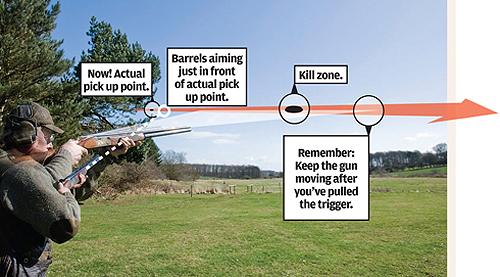
Sea gulls are a pest species...
PULL!
Re: The big conversation
Posted: Tue Jul 21, 2015 3:19 am
by BoSoxGal
Pardon me, wesw, your willful ignorance confused me.
Yes, in that sentence 'prey birds' (i.e., 'birds of prey'), the word 'prey' is descriptive, i.e., an adjective.
But that doesn't change the fact that rubato was wrong, and you are wrong in defending him.
Birds of prey = predatory birds = prey birds; they all are used interchangeably in ornithological studies to describe birds that eat things - like puppies and tiny dogs and turtles - as means of sustenance.
Now, can YOU please explain how I am wrong? Because I have provided evidence to support my assertion and you have only said 'neener neener neener' - which is sophomoric and tiresome.
Re: The big conversation
Posted: Tue Jul 21, 2015 3:21 am
by BoSoxGal
Lord Jim wrote:Sea gulls are a pest species...
No, they're protected by the Migratory Bird Treaty Act (and the subsequent MBTRA).
Family LARIDAE
Subfamily LARINAE
Creagrus furcatus, Swallow-tailed Gull
Rissa tridactyla, Black-legged Kittiwake
Rissa brevirostris, Red-legged Kittiwake
Pagophila eburnea, Ivory Gull
Xema sabini, Sabine’s Gull
Chroicocephalus philadelphia, Bonaparte’s Gull
Chroicocephalus cirrocephalus, Gray-hooded Gull
Chroicocephalus ridibundus, Black-headed Gull
Hydrocoloeus minutus, Little Gull
Rhodostethia rosea, Ross’s Gull
Leucophaeus atricilla, Laughing Gull
Leucophaeus pipixcan, Franklin’s Gull
Larus belcheri, Belcher’s Gull
Larus crassirostris, Black-tailed Gull
Larus heermanni, Heermann’s Gull
Larus canus, Mew Gull
Larus delawarensis, Ring-billed Gull
Larus occidentalis, Western Gull
Larus livens, Yellow-footed Gull
Larus californicus, California Gull
Larus argentatus, Herring Gull
Larus michahellis, Yellow-legged Gull
Larus thayeri, Thayer’s Gull
Larus glaucoides, Iceland Gull
Larus fuscus, Lesser Black-backed Gull
Larus schistisagus, Slaty-backed Gull
Larus glaucescens, Glaucous-winged Gull
Larus hyperboreus, Glaucous Gull
Larus marinus, Great Black-backed Gull
Larus dominicanus, Kelp Gull
Re: The big conversation
Posted: Tue Jul 21, 2015 3:26 am
by BoSoxGal
wesw wrote:oh I think that you qualify for a full BS....
Miriam Webster has it listed as a verb and a noun. no listing as an adjective.....
So what, did you not have the ability to find this listing in the MW?:
Re: The big conversation
Posted: Tue Jul 21, 2015 3:34 am
by Lord Jim
they're protected by the Migratory Bird Treaty Act (and the subsequent MBTRA).
My oh my, is that a fact...
The "Migratory Bird Treaty Act"...
Really...
Dear me...
The sea gulls 'round these parts do not so much "migrate" as act like film extras in Alfred Hitchcock's
The Birds...
Re: The big conversation
Posted: Tue Jul 21, 2015 3:44 am
by BoSoxGal
http://www.fws.gov/migratorybirds/regul ... intro.html
BIRDS PROTECTED BY THE
MIGRATORY BIRD TREATY ACT
The Migratory Bird Treaty Act makes it illegal for anyone to take, possess, import, export, transport, sell, purchase, barter, or offer for sale, purchase, or barter, any migratory bird, or the parts, nests, or eggs of such a bird except under the terms of a valid permit issued pursuant to Federal regulations. The migratory bird species protected by the Act are listed in 50 CFR 10.13. For the current rule and more information click here
For an alphabetical list of MBTA protected birds click here.
The U.S. Fish and Wildlife Service has statutory authority and responsibility for enforcing the Migratory Bird Treaty Act (MBTA) (16 U.S.C. 703–712), the Fish and Wildlife Improvement Act of 1978 (16 U.S.C. 742l) and the Fish and Wildlife Act of 1956 (16 U.S.C. 742a–j). The MBTA implements Conventions between the United States and four countries (Canada, Mexico, Japan and Russia) for the protection of migratory birds.
What criteria are used to identify individual species protected by the MBTA?
A species qualifies for protection under the MBTA by meeting one or more of the following four criteria:
(1) It is covered by the Canadian Convention of 1916, as amended in 1996, by virtue of meeting the following three criteria: (a) It belongs to a family or group of species named in the Canadian Convention, as amended; (b) Specimens, photographs, videotape recordings or audiotape recordings provide convincing evidence of natural occurrence in the United States or its territories; and (c) The documentation of such records has been recognized by the AOU or other competent scientific authorities.
(2) It is covered by the Mexican Convention of 1936, as amended in 1972, by virtue of meeting the following three criteria: (a) It belongs to a family or group of species named in the Mexican Convention, as amended; (b) Specimens, photographs, videotape recordings or audiotape recordings provide convincing evidence of natural occurrence in the United States or its territories; and (c) The documentation of such records has been recognized by the AOU or other competent scientific authorities.
(3) It is listed in the annex to the Japanese Convention of 1972, as amended.
(4) It is listed in the appendix to the Russian Convention of 1976.
In accordance with the Migratory Bird Treaty Reform Act of 2004 (MBTRA) (Pub. L. No. 108-447, 118 Stat. 2809, 3071–72), we included all species native to the United States or its territories, which are those that occur as a result of natural biological or ecological processes (See 70 FR 12710, March 15, 2005). We did not include nonnative species whose occurrences in the United States are solely the result of intentional or unintentional human-assisted introduction(s).
Here's the list of birds covered:
http://www.fws.gov/migratorybirds/regul ... TANDX.HTML