
One August evening, in Brue Close, a housing estate in Weston-super-Mare, police and emergency services were called to No 39.
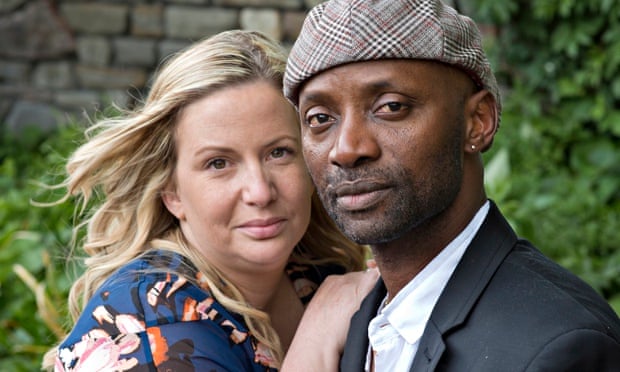
Two police cars, a police van, a dog and several officers arrived. They saw a crowd of hostile white adults, “an angry mob” and a middle-aged black man standing in his front garden bleeding profusely from a head wound. His five-year-old daughter was distraught. The emergency services were responding to two separate reports. The first came from Kim Jones, the tenant at No 39, requesting urgent help for her partner, Tajudeen “Deen” Taiwo. She said he had been the victim of a racial assault. His head had been banged against a wall, cracking it open. The second call said a black man had a knife.
What subsequently unfolded is to become part of an innovatory attempt by Avon and Somerset police to challenge police behaviour and attitudes that consciously or otherwise sanction hate crime. Following his arrest, a publicly humiliated Taiwo was taken to hospital in handcuffs to have his head wound treated. He needed 14 stitches. He was kept in custody for 35 hours in total and charged with a number of offences, including possession of an offensive weapon and threats to kill while his family, which includes two boys from an earlier relationship of Jones’s, were left without support on an estate with hostile neighbours.
It took three years of struggle, a flawed internal police inquiry that revealed officers’ complete ignorance of the force’s own hate policy and inept disciplinary procedures before Avon and Somerset police finally accepted culpability for its discriminatory behaviour and made a public apology, paid compensation and made a commitment to involve the family in an overhaul of its training procedure. Part of that overhaul includes the making of a documentary of Taiwo and Jones’s experience so that it can be used as a tool to tackle racism and prejudice in police ranks (this is the first time in Britain that the police have used this approach). Filming begins on Thursday. The impact of this new training approach will be monitored by the force for 12 months.
The documentary will be made by a team headed by former BBC Bristol-based film-maker Jon Mowat, executive producer Lynn Barlow (Anatomy of a Crime, for which she was series producer, is a multi-award-winning police documentary) and directed by Andy Mundy-Castle, who recently made African Masters, a series on contemporary African art for the Africa Channel, among other documentaries. The aim is for the documentary to have a wider audience with other police forces and public services, such as housing providers who work with the police to support victims of hate crime. “We are involving a psychologist in the making of the film because we want to find the most effective way to challenge stereotypes and a system of thought within some sectors of the police,” says Mowat. “We won’t use a dramatic reconstruction. Deen and Kim will tell their own story. It’s a horror story. That’s what will give emotional power to the training tools that go alongside the film.”
More here...
Hate crime into a documentary
Hate crime into a documentary
“If you trust in yourself, and believe in your dreams, and follow your star. . . you'll still get beaten by people who spent their time working hard and learning things and weren't so lazy.”