
Report: Dr. Jack Kevorkian dead at 83
June 3rd, 2011
08:49 AM ET
Dr. Jack Kevorkian has died at the age of 83, according the Detroit Free Press, who spoke with his lawyer.
Kevorkian died at Beaumont Hospital in Royal Oak, where he had been hospitalized for about two weeks with kidney and heart problems, attorney Mayer Morganroth told the newspaper.
Morganroth said it appears Kevorkian suffered a pulmonary thrombosis when a blood clot from his leg broke free and lodged in his heart. With Kevorkian were his niece Ava Janus and Morganroth.
“It was peaceful," Morganroth told the paper. "He didn’t feel a thing."
Kevorkian was known as "Dr. Death" because of his time spent as an assisted-suicide advocate.
No Need For His Own Machine
No Need For His Own Machine
Your collective inability to acknowledge this obvious truth makes you all look like fools.
yrs,
rubato



Re: No Need For His Own Machine
Good riddance.
Kevorkian was such an odious, obnoxious, and strange character that he probably did more to set back legitimate "death with dignity" efforts than all the Holy Roller preachers combined....
Here are a few facts about the good "Doctor":
The evidence is overwhelming that Kevorkian was a man with a fetish-like fascination with death who preyed on the psychologically vulnerable; depressed people with low self esteem... and used the whole "death with dignity" bit as a cover for his twisted obsessions.
He spent eight years in prison. He should have gone there sooner and he should have died there.
Kevorkian was such an odious, obnoxious, and strange character that he probably did more to set back legitimate "death with dignity" efforts than all the Holy Roller preachers combined....
Here are a few facts about the good "Doctor":
http://abcnews.go.com/Health/inside-jac ... d=13756960But it is important to remember some forgotten facts about how he went about his business:
1.Most of the People Who Died Under Kevorkian's Direction Were Not Terminally Ill
According to a December 2000 study in The New England Journal of Medicine, only 25 percent were terminally ill, and 7 percent showed no signs of physical illness at all. Thirteen percent had symptoms of clinical depression, and a disproportionate number were divorced, widowed or never married.
The study covered about half of Kevorkian's known "patients" between 1990 and 1998 -- those who were autopsied by the Oakland County, Mich., medical examiner's office -- but there is no reason to believe the numbers would change if all of the people he serviced were included. A 2001 study in The Gerontologist reached similar conclusions. Click here to read the full study.
2. An Astounding 71 Percent of Those Who Died Under Kevorkian's Direction Were Women
The same study revealed this startling, and disturbing, gender discrepancy in Kevorkian's work. Feminist public-health scholars have said that the reason is simple: Men in our society have an expectation that they will be cared for -- by women, by the system, by their greater wealth.
Older women are far more likely to be alone, impoverished, suffering from depression, and generally devalued by our society. Several of the women who went to Kevorkian explained themselves using the exact same words: They "did not want to be a burden." In some ways, there is nothing more worthless in American society than a sick old woman. It is likely that many of the women who sought Kevorkian out with such desperation had internalized that skewed value system.
3. Kevorkian Had No Legitimate Screening System, and Refused All Proposals to Regularize His Procedures
He was a law unto himself. And that arrogance led to a plain and terrible fact: People died under his direction who needed help, legal and psychiatric help -- not poison. In 1997, The Detroit Free Press investigated and profiled many of those who died under Kevorkian's direction. Several women were victims of domestic violence. Many of his patients were depressed at a recent diagnosis of a challenging disease -- multiple sclerosis, Alzheimer's, cancer. Others had very treatable conditions: diabetes, back pain, arthritis.
And then there was the case of the woman who traveled to Michigan to die, accompanied by her encouraging husband. He remarried a few weeks later.
To millions of Americans, Jack Kevorkian was a crusader and a champion of human rights.
But Kevorkian's critics have often pointed to these facts as evidence that his motives were not pure and his methods deeply flawed. They also note that over the course of his career, he seemed obsessed with death, painted gruesome scenes using human blood, and that, as a pathologist, he had never really treated patients prior to helping them die.[he also did a "study" on the facial expressions of corpses]
To these critics -- in the disabled community, among some feminists and among many pro-life Christians -- the final verdict on this controversial man is the one pronounced by former US Surgeon General C. Everett Koop. Jack Kevorkian, he said, was "America's most successful serial killer."
And, long ago, he lost the right to be called "doctor." Michigan pulled his state medical license in 1991 and his California license was revoked two years later.
The evidence is overwhelming that Kevorkian was a man with a fetish-like fascination with death who preyed on the psychologically vulnerable; depressed people with low self esteem... and used the whole "death with dignity" bit as a cover for his twisted obsessions.
He spent eight years in prison. He should have gone there sooner and he should have died there.



Re: No Need For His Own Machine
I disagree, Jim.Lord Jim wrote:Good riddance.
I remember when I saw Dr Kevorkian interviewed on several occasions, because of his odd personality, he was not the best person in my opinion, to represent the idea of assisted suicide.
But I believe that Kevorkian was sincere and certainly not a murderer - and that NOT allowing people who are terminally ill and in constant pain to end their own lives is wrong.
I recently read an opinion expressed that we put down animals that are terminally ill to end their suffering, but that isn't acceptable for humans.
We, in California, put convicted brutal murderers to death with a shot that allows them to die painlessly while they sleep.
But, if I were in extreme pain and could not care for myself I would not be allowed to die without experiencing extreme pain - because suicide is unacceptable.
Instead, my family (or the government) would be expected to care for me until I die a natural, if not extremely painful death, because that is simply the law.
Re: No Need For His Own Machine
I agree Joe.NOT allowing people who are terminally ill and in constant pain to end their own lives is wrong.
But the statistics on the people he "assisted" shows conclusively that aiding those who were "terminally ill and in constant pain" wasn't what Kervorkian was primarily about in practice....
He used that as a cover for getting his jollies with far more sinister and unethical behavior.
People who see Kervorkian as some great champion of the concept of "death with dignity" for those suffering terminal illness and terrible pain, have fallen for his con.
The facts (as are made starkly clear in the article I copied and linked to) are demonstrably otherwise.
Re: No Need For His Own Machine
He was a sincere champion for what he believed. Unfortunately, he was not the most effective messenger and people invented all kinds of lies about his motives to discredit him.
His ultimate victory is that so many of them now agree with him.
yrs,
rubato
His ultimate victory is that so many of them now agree with him.
yrs,
rubato
Re: No Need For His Own Machine
I have to admit, Jim, until I read your linked article, my opinion of Kevorkian was based on him bringing the idea of allowing assisted suicide into the public for discussion. I had no idea (assuming your article is accurate) that he had assisted people who probably needed another type of assistance.
I always thought Kevorkian was kind of strange and probably not very likeable, but I believed in what he crusaded for. I'd guess that like me, most people looked past him and focused on the issue of allowing sick people to die if they chose to do so.
Of course, a good argument could probably be made that every single person he helped to die would have killed themselves in a much messier way and he was justified in assisting them.
btw - I thought he was already dead, so hearing that he just died was quite a surprise.
I always thought Kevorkian was kind of strange and probably not very likeable, but I believed in what he crusaded for. I'd guess that like me, most people looked past him and focused on the issue of allowing sick people to die if they chose to do so.
Of course, a good argument could probably be made that every single person he helped to die would have killed themselves in a much messier way and he was justified in assisting them.
btw - I thought he was already dead, so hearing that he just died was quite a surprise.
Re: No Need For His Own Machine
Well Joe, I think a much stronger case could be made that most of those people, if they had gotten the right kind of help, rather than falling into manipulative clutches of Dr. Death, would never have committed suicide at all.Of course, a good argument could probably be made that every single person he helped to die would have killed themselves in a much messier way and he was justified in assisting them.
Obviously, the number of people who at some point or another in their lives reach a juncture of such despair that they contemplate suicide, is much higher than the number of those who carry it out. A lot of the time the difference is what kind of support, (if any) a person receives at that point. That's why we have "suicide prevention hotlines"...
Kevorkian was essentially running a one-man "suicide encouragement hotline". And then offering free elevator rides and escort service to the ledge....
Re: No Need For His Own Machine
That's difficult to determine. Unless Dr K was actually encouraging people to die, I would think that those who got his assistance were very serious about dying and going to accomplish it one way or the other.Lord Jim wrote: Well Joe, I think a much stronger case could be made that most of those people, if they had gotten the right kind of help, rather than falling into manipulative clutches of Dr. Death, would never have committed suicide at all.
But there's no way of knowing that now.
Re: No Need For His Own Machine
Wow, all those people with cancer, MS, Lou Gehrigs disease, Huntingtons, Alzsheimers, Parkinson's, would have become Nobel prize winners and Olympic athletes! If only that horrible Dr Kevorkian had not met them!Lord Jim wrote:Well Joe, I think a much stronger case could be made that most of those people, if they had gotten the right kind of help, rather than falling into manipulative clutches of Dr. Death, would never have committed suicide at all.Of course, a good argument could probably be made that every single person he helped to die would have killed themselves in a much messier way and he was justified in assisting them.
...
tra - fucking - la!
Only a moron with no understanding or human compassion could say such a thing.
yrs,
rubato
Re: No Need For His Own Machine
What about this guy?
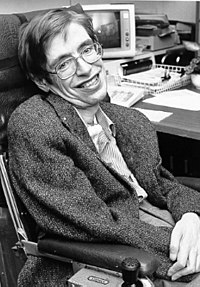
Your collective inability to acknowledge this obvious truth makes you all look like fools.
yrs,
rubato
Re: No Need For His Own Machine
That guy had, and made, a choice.dales wrote:What about this guy?
Everyone should have a choice in that matter.
yrs,
rubato

Re: No Need For His Own Machine
Yes, but that choice must be *informed* or its not truly choice. From LJ's article, I'd question whether or not those people gave truly informed consent.
“I ask no favor for my sex. All I ask of our brethren is that they take their feet off our necks.” ~ Ruth Bader Ginsburg, paraphrasing Sarah Moore Grimké

Re: No Need For His Own Machine
Most of those cases are based on how you would define "terminal"
Okay... There's all kinds of things wrong with what you just said.

Re: No Need For His Own Machine
I think there were probably some cases that should be considered questionable, but:
Just because someone isn't considered "terminal" i.e. is not going to die within 6 months or 2 years, or whatever timeframe has been imposed, doesn't mean they are not suffering and/or are not going to die of the disease they have.
It's probably true that a lot of Kevorkian's "clients" were women because they didn't believe there would be anyone to take care of them. So what? If that was their reality, then why should they have been denied the right to choose to end their lives on their terms rather than suffer alone?
13% were clinically depressed, again, so what? Among a population that is suffering or terminally ill, I am surprised the number is not three or four times higher. "Clinically depressed" does not automatically equate to "incompetent to form intent and give consent".
As to trying to make something of the husband that got remarried within weeks of his wife killing herself, there are A LOT of women, especially, who when terminally ill take steps to see there will be someone to step in to be there for their husbands after they are gone. This could just as easily have been one of those cases as a case of a husband trying to hasten his wife's death so he could remarry.
Just because someone isn't considered "terminal" i.e. is not going to die within 6 months or 2 years, or whatever timeframe has been imposed, doesn't mean they are not suffering and/or are not going to die of the disease they have.
It's probably true that a lot of Kevorkian's "clients" were women because they didn't believe there would be anyone to take care of them. So what? If that was their reality, then why should they have been denied the right to choose to end their lives on their terms rather than suffer alone?
13% were clinically depressed, again, so what? Among a population that is suffering or terminally ill, I am surprised the number is not three or four times higher. "Clinically depressed" does not automatically equate to "incompetent to form intent and give consent".
As to trying to make something of the husband that got remarried within weeks of his wife killing herself, there are A LOT of women, especially, who when terminally ill take steps to see there will be someone to step in to be there for their husbands after they are gone. This could just as easily have been one of those cases as a case of a husband trying to hasten his wife's death so he could remarry.
"Hang on while I log in to the James Webb telescope to search the known universe for who the fuck asked you." -- James Fell