Grammar Nazi Quiz
Grammar Nazi Quiz
“If you trust in yourself, and believe in your dreams, and follow your star. . . you'll still get beaten by people who spent their time working hard and learning things and weren't so lazy.”


Re: Grammar Nazi Quiz
0-3: Colon confusenik
My colon needs all the help it can get.
(actually I recieved a higher score, so there)

Your collective inability to acknowledge this obvious truth makes you all look like fools.
yrs,
rubato

Re: Grammar Nazi Quiz
Lucky for you it wasn't a "BBC Quiz On Recognizing Typos"....Embarrassingly, only 5/10 for me.
Or the results might have been far more embarrassing...

9/10...
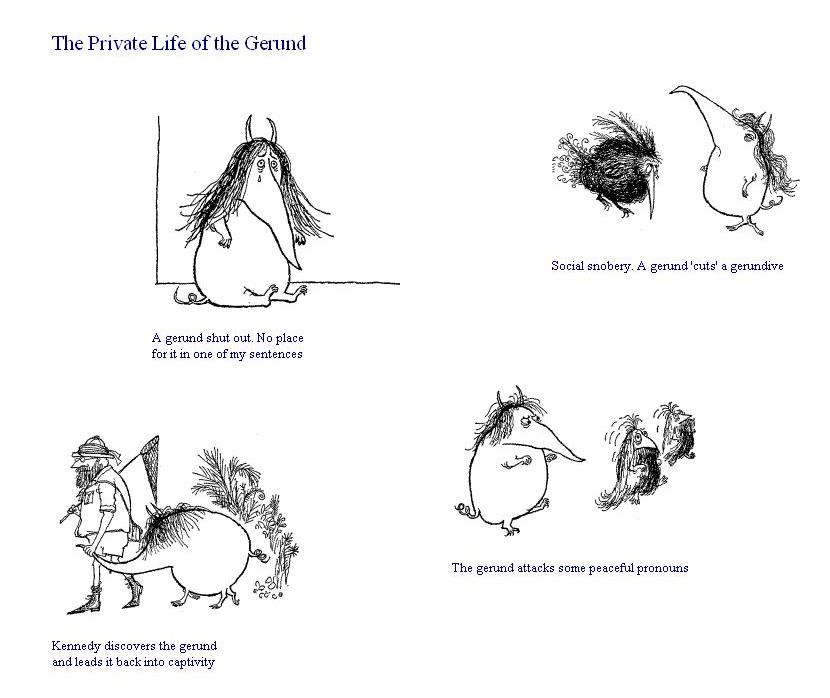
Life is too short to remember the difference between a "gerund" a "modal" and an "imperative"...


Re: Grammar Nazi Quiz
Caring about grammar is something I don't...
Sometimes it seems as though one has to cross the line just to figger out where it is
-
Econoline
- Posts: 9607
- Joined: Sun Apr 18, 2010 6:25 pm
- Location: DeKalb, Illinois...out amidst the corn, soybeans, and Republicans
Re: Grammar Nazi Quiz
10/10!
Achtung! Ve haf vays uf making you grammatical!
Nein, ve don't....ve haf vays uf ignoring your boo-boos...
Achtung! Ve haf vays uf making you grammatical!
Nein, ve don't....ve haf vays uf ignoring your boo-boos...
People who are wrong are just as sure they're right as people who are right. The only difference is, they're wrong.
— God @The Tweet of God
— God @The Tweet of God

Re: Grammar Nazi Quiz
5/10 surprised the hell out of me
Okay... There's all kinds of things wrong with what you just said.

Re: Grammar Nazi Quiz
8/10 but as a northerner I take issue with #9. The 'wrong' answer sounds perfectly reasonable to me...
Why is it that when Miley Cyrus gets naked and licks a hammer it's 'art' and 'edgy' but when I do it I'm 'drunk' and 'banned from the hardware store'?

Re: Grammar Nazi Quiz
Another 8/10 here.
Must be the northern upbringing Sean
Must be the northern upbringing Sean
-
MajGenl.Meade

- Posts: 21516
- Joined: Sun Apr 25, 2010 8:51 am
- Location: Groot Brakrivier
- Contact:
Re: Grammar Nazi Quiz
7/10
 I know nothing of gerunds and "may or might" defeated me.
 That one about the brother was stupid. "This is my sister who lives in Madrid and this is my brother Fred who doesn't and this is my sibling, Hilary"
It was not stated that the sentence structure was correct. With or without the comma, the narrator is saying that brother Fred does not live in Madrid. With or without the comma, it can never be assumed that sibling Hilary does live in Madrid and must be male.
Besides, Hilary's a girl's name and any male named Hilary should be disinherited and sent to live in Barcelona
Meade
For Christianity, by identifying truth with faith, must teach-and, properly understood, does teach-that any interference with the truth is immoral. A Christian with faith has nothing to fear from the facts
-
oldr_n_wsr
- Posts: 10838
- Joined: Sun Apr 18, 2010 1:59 am
Re: Grammar Nazi Quiz
I do grammar not.
Re: Grammar Nazi Quiz
I agree with MajGenl.Meade that the BBC is wrong on number 3.
Besides violating parallelism, the sentence also bungles appositives. That matters, because the BBC's answer hinges on the lack of a comma after "my brother" -- a comma which would turn would turn "my brother" into an appositive separate from "who doesn't".
But "my brother who doesn't" is an appositive itself. See, e.g., the fourth example here: In the sentence "The insect, a large, hairy-legged cockroach that has spied my bowl of oatmeal, is crawling across the kitchen table," the entire emphasized phrase is an appositive. (Emphasis in original.)
As correctly stated in the linked article, "a nonessential appositive is always separated from the rest of the sentence with comma(s)." (Emphasis in original.) The phrase "my brother who doesn't" is separated from the rest of the sentence by commas, and there is no comma within that phrase. Therefore, that phrase must be an appositive referring to "Benedict," and it carries no implication at all that there are other brothers.
And it especially risible that the BBC's answer should depend on the punctuation of an appositive, because the BBC mispunctuates the first appositive in the sentence: The sentence should begin "I'd like to introduce you to my sister, Clara, who ...."
(For those of you who think that "my sister Clara" is correct: If that is so, then "my only other sibling Hilary" must also be correct. But despite having put no comma before "Clara" the BBC put a comma before "Hilary". The BBC cannot have it both ways.)
The BBC's having botched parallelism, misunderstood appositives, and misapplied the very pseudo-rule on which it erroneously relies dissuaded me from taking the rest of the quiz. I prefer to be tested on grammar by people who actually understand it.
The sentence, ungrammatical as it is, plainly does not mean that "my brother who doesn't" is someone other than Benedict. To mean that, the sentence would have to read:"I'd like to introduce you to my sister Clara, who lives in Madrid, to Benedict, my brother who doesn't, and to my only other sibling, Hilary." Which of the following is correct?
* * *He's male. The absence of a comma before "who doesn't" implies that there are other brothers. A comma after "my brother" would mean that there was only one brother.
Parallelism requires "to A, to B, to C, and to D." The phrasing "to A, to B, C, and to D" is gibberish."I'd like to introduce you to my sister Clara, who lives in Madrid, to Benedict, to my brother who doesn't, and to my only other sibling, Hilary."
Besides violating parallelism, the sentence also bungles appositives. That matters, because the BBC's answer hinges on the lack of a comma after "my brother" -- a comma which would turn would turn "my brother" into an appositive separate from "who doesn't".
But "my brother who doesn't" is an appositive itself. See, e.g., the fourth example here: In the sentence "The insect, a large, hairy-legged cockroach that has spied my bowl of oatmeal, is crawling across the kitchen table," the entire emphasized phrase is an appositive. (Emphasis in original.)
As correctly stated in the linked article, "a nonessential appositive is always separated from the rest of the sentence with comma(s)." (Emphasis in original.) The phrase "my brother who doesn't" is separated from the rest of the sentence by commas, and there is no comma within that phrase. Therefore, that phrase must be an appositive referring to "Benedict," and it carries no implication at all that there are other brothers.
And it especially risible that the BBC's answer should depend on the punctuation of an appositive, because the BBC mispunctuates the first appositive in the sentence: The sentence should begin "I'd like to introduce you to my sister, Clara, who ...."
(For those of you who think that "my sister Clara" is correct: If that is so, then "my only other sibling Hilary" must also be correct. But despite having put no comma before "Clara" the BBC put a comma before "Hilary". The BBC cannot have it both ways.)
The BBC's having botched parallelism, misunderstood appositives, and misapplied the very pseudo-rule on which it erroneously relies dissuaded me from taking the rest of the quiz. I prefer to be tested on grammar by people who actually understand it.
Reason is valuable only when it performs against the wordless physical background of the universe.