
he Liquor Control Board of Ontario (LCBO) is recalling bottles of Georgian Bay Vodka after one batch was made with 81 per cent alcohol.
The recall was initiated after it was discovered that one batch was bottled before being properly diluted, resulting in an alcohol content more than double the regular 40 per cent.
It says an alcohol level of 81 per cent is “not safe for consumption” and could cause serious illness.
According to the Canadian Inspection Agency, where the notice was posted on Wednesday, there have been no reported illnesses associated with the product so far.
The LCBO says the batch of 654 bottles have been removed from store shelves but any customers and licensees who have bottles from the affected batch should return them for a full refund. (yeah, like that's gonna happen)
The vodka is produced by the Toronto-based Georgian Bay Gin Company.
Wasn't that a party
Wasn't that a party
"Hang on while I log in to the James Webb telescope to search the known universe for who the fuck asked you." -- James Fell
Re: Wasn't that a party
I would think the drinkers should notice the difference between 81 and 160 proof vodka (100 proof vodka is easily distinguishable for 80 proof), at least I hope they would. that would have to be like drinking razor blades.
-
oldr_n_wsr
- Posts: 10838
- Joined: Sun Apr 18, 2010 1:59 am
Re: Wasn't that a party
Where was this when I was drinking!?!!??81 per cent alcohol.

I had real home made appalacian moonshine. Don't remember the proof (they didn't glue a sticker to the side of the jar).
That stuff tasted:
They also had a jar with marrocino cherry's in it. That wasn't too bad.like drinking razor blades.
Re: Wasn't that a party
As I recall, everclear is 190 proof (95% alcohol) which is the highest concentration of ethanol that can be achieved by distillation since it forms a constant boiling mixture (azeotrope) of 95% EtOH, 5% water; one can get 100% (absolute) ethanol, but it has to be obtained by using some chemical tricks and is very expensive (we used to have it in our lab in college and used it for punch for parties). Moonshine can be the same, but is ordinarily diluted with water to 130 or 140 proof (65-70%).
Re: Wasn't that a party
I know, I was thinking every hard drinker is now on a hunt for one of these rare bottles!oldr_n_wsr wrote: Where was this when I was drinking!?!!??
Re: Wasn't that a party

It used to be illegal calif. but I've seen it at the local vice store. I don't know which proof is legal here.Proof (US) 190, 189, or 151
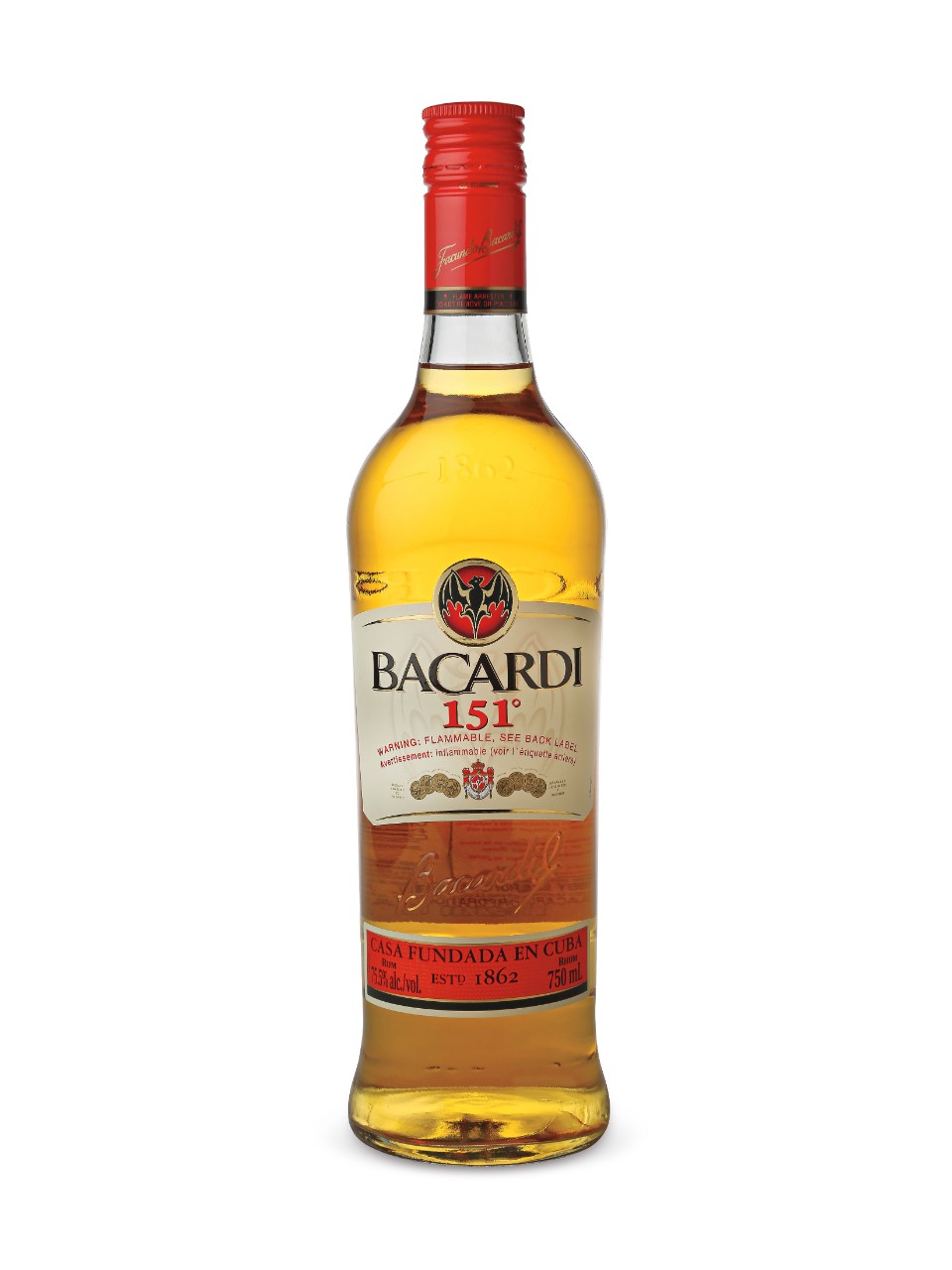
And others. Most are strictly for young males interested in titrating themselves into paralysis. The same group who gather to eat ghost peppers and scotch bonnets for fun.
yrs,
rubato
Re: Wasn't that a party
A big disadvantage of not having access to higher concentrations of ethanol is in making homemade liqueurs. My mother likes to make her own limoncello; starting it with high (80-90%) ethanol spirits and then diluting it with water produces a better product than using the 40% spirits we are limited to here without dilution, because the higher ethanol concentration extracts more of the flavourful oils from the lemon rind. I imagine it would be the same for other types of liqueurs.
"Hang on while I log in to the James Webb telescope to search the known universe for who the fuck asked you." -- James Fell
Re: Wasn't that a party
True--I forgot about 151; and I have a couple of bottles in my bar .
Scooter--I have no doubt about that--the extraction of the flavors is probably enhanced by the higher ethanol concentrations.
Scooter--I have no doubt about that--the extraction of the flavors is probably enhanced by the higher ethanol concentrations.
-
Burning Petard
- Posts: 4627
- Joined: Fri Feb 12, 2016 5:35 pm
- Location: Near Bear, Delaware
Re: Wasn't that a party
Everclear is sold at liquor beverage stores here in Delaware. I have a bottle on my kitchen counter marked as 190 proof. It is ideal for cleaning electronic gadgets--evaporates quickly. Does a great job of removing and killing mold on stuff that bleach would harm--like books and other paper goods, leather. As it is sold for drinkin' it is less likely that the non-ethanol content will be harmful, unlike de-natured alcohol.
snailgate
snailgate
Re: Wasn't that a party
Burning Petard wrote:Everclear is sold at liquor beverage stores here in Delaware. I have a bottle on my kitchen counter marked as 190 proof. It is ideal for cleaning electronic gadgets--evaporates quickly. Does a great job of removing and killing mold on stuff that bleach would harm--like books and other paper goods, leather. As it is sold for drinkin' it is less likely that the non-ethanol content will be harmful, unlike de-natured alcohol.
snailgate
You can get 91% IPA or Ethanol rubbing alcohol a lot cheaper. Denatured alcohol is usually made by adding methanol and IPA. IPA = isopropyl alcohol. Occasionally they use more noxious things but it should be on the label.
yrs,
rubato
Re: Wasn't that a party
It happened again:
The Liquor Control Board of Ontario is recalling 1.14-litre bottles of Bombay Sapphire London Dry Gin because the incorrect alcohol content is shown on the label.
The LCBO says the affected product – lot code L16304 W and UPC 6 20213 19020 8 – has been removed from all of its stores’ shelves.
The Crown corporation says the recall was initiated after an investigation by its quality assurance team found the alcohol content was 77 per cent, instead of the 40 per cent declared on the label.
Customers and licensees are advised to return the recalled product to any LCBO store for a full refund. (again, as if that's gonna happen)
Click here for more information on the recall.
This is the second such incident in Ontario in as many months.
An Ontario-made brand of vodka was pulled from shelves in early March because one batch contained double the stated amount of alcohol.
The batch of Georgian Bay brand vodka was not properly diluted prior to bottling, resulting in 654 bottles containing 81 per cent alcohol instead of 40 per cent as shown on the label.
"Hang on while I log in to the James Webb telescope to search the known universe for who the fuck asked you." -- James Fell
Re: Wasn't that a party
wow, droughts must be driving water prices up so they can't afford to dilute it.
-
Bicycle Bill
- Posts: 9823
- Joined: Thu Dec 03, 2015 1:10 pm
- Location: Living in a suburb of Berkeley on the Prairie along with my Yellow Rose of Texas
Re: Wasn't that a party
Doesn't say much for the QA team if all that product made it out of the distillery and onto the store shelves. One would think there would be an on-going process to monitor the alcohol concentration of what's going into the bottles before it gets to that point. How did they find out? Someone came back and reported that his bottle of firewater was a little more fiery than usual? (yeah, like that's gonna happen!)The Crown corporation says the recall was initiated after an investigation by its quality assurance team found the alcohol content was 77 per cent, instead of the 40 per cent declared on the label.
And of course, this also raises the question — at least in my mind — of how many times these companies might have released batches of hootch that were less potent than the label stated but nobody said nuthin'?

-"BB"-
Yes, I suppose I could agree with you ... but then we'd both be wrong, wouldn't we?
Re: Wasn't that a party
Just like any purchaser of any product, the LCBO does not have access to the distiller's premises to inspect product; it can only do so after it has accepted delivery of the product. What happens at the distillery is the distiller's responsibility. Even if it were permissible, it would not be practical for the LCBO or any liquor retailer to station QA staff in thousands of distilleries around the world in order to monitor product as it is being made.
"Hang on while I log in to the James Webb telescope to search the known universe for who the fuck asked you." -- James Fell
Re: Wasn't that a party
Scooter--isn't there a national or provincial body that is responsible for licensing the sale of alcoholic beverages? If so, I would be surprised if they did not have the right to inspect distilleries and take random lots of product to test for compliance with laws (such as an accurate statement to alcohol content). Not that the system is foolproof (obviously), but some agency should have that responsibility.
Early in my career, I worked at a lab that was an agent of the US Department of Transportation, and we had inspectors who went to shippers of certain hazardous materials nationwide and seized random samples of them for analysis. I would think maintenance of an alcoholic beverage producers license would require the same thing. Is it different in Canada?
Early in my career, I worked at a lab that was an agent of the US Department of Transportation, and we had inspectors who went to shippers of certain hazardous materials nationwide and seized random samples of them for analysis. I would think maintenance of an alcoholic beverage producers license would require the same thing. Is it different in Canada?
Re: Wasn't that a party
There are provincial liquor licensing bodies that do have the power to inspect local distilleries, but of course they have jurisdiction only within the province and would have no power to conduct inspections in whatever far flung corners of the world the respective provincial liquor retailers are purchasing product.
"Hang on while I log in to the James Webb telescope to search the known universe for who the fuck asked you." -- James Fell
Re: Wasn't that a party
But if liquor from those distilleries enter the province, I would think they would have some right to at least seize samples and inspect them before they are distributed in the province.
The silly point is that water is cheaper than the distilled alcohol, so one would think a distiller would be more likely to err ion the low side rather than the high side, so it was a pretty big screw up of the Distillers that cost them money.
The silly point is that water is cheaper than the distilled alcohol, so one would think a distiller would be more likely to err ion the low side rather than the high side, so it was a pretty big screw up of the Distillers that cost them money.
Re: Wasn't that a party
I would imagine that federal customs agents would have the power to inspect incoming liquor to ensure that it doesn't exceed maximum alcohol content. But how much priority are they going to assign to inspecting the product of a long established importer like Bacardi? Particularly since, as you say, it would be a silly distiller who would do this with any intent.
"Hang on while I log in to the James Webb telescope to search the known universe for who the fuck asked you." -- James Fell
Re: Wasn't that a party
That is an odd mistake for them to make since they are throwing away profit by selling fewer bottles.
I would think ordinary self-interest would be enough to keep them from doing it.
yrs,
rubato
I would think ordinary self-interest would be enough to keep them from doing it.
yrs,
rubato
-
ex-khobar Andy
- Posts: 5842
- Joined: Sat Dec 19, 2015 4:16 am
- Location: Louisville KY as of July 2018
Re: Wasn't that a party
i have real trouble believing all this. Measurement of alcohol is pretty easy if you know what you are doing and why should a corporation selling whisky/gin halve their production (Rube's point above) by putting two doses of alcohol into each bottle (77% instead of 40%). Reminds me of the Chilean grape thing from 1989 when we were asked to believe that in all the Chilean grapes exported to the US, FDA inspectors had found the two with injected cyanide. No way. From a food safety website we can see that the pH of grapes is pretty acid - there is no way a cyanide will survive for long in there. Yet Chile lost $300 million in grape and other fruit exports. So lab errors do happen.
Grapes, Concord 2.80-3.00
Grapes, Niagara 2.80-3.27
Grapes, seedless 2.90-3.82
I think this is a lab error somehow - either a mixed up sample or (more likely) a standard which has been wrongly made up. That is pretty easy to do especially as the 'found' concentration is very close to double the expected concentration. My immediate suspicion is a standard preparation error (2x) and a minor non-linearity in the response curve (I can explain if you want but trust me - I'm an analytical chemist) which might explain the other 4% (relative: 77/80 = 0.96) error.
Grapes, Concord 2.80-3.00
Grapes, Niagara 2.80-3.27
Grapes, seedless 2.90-3.82
I think this is a lab error somehow - either a mixed up sample or (more likely) a standard which has been wrongly made up. That is pretty easy to do especially as the 'found' concentration is very close to double the expected concentration. My immediate suspicion is a standard preparation error (2x) and a minor non-linearity in the response curve (I can explain if you want but trust me - I'm an analytical chemist) which might explain the other 4% (relative: 77/80 = 0.96) error.