There's a very good chance that this will drag into the new year, and the next Congress...
Because a lot fewer people and services are effected than in previous shutdowns, (only about 25% of government personnel and operations are affected; for example the troops will continue to get paid, so they don't have the PR disaster of people risking their lives in war zones not getting their pay checks) and because a lot of people take vacation time at this time of year anyway, the public pressure for a resolution will probably take longer to build than during previous shutdowns...
From the link in my last post:
The impasse blocked money for nine of 15 Cabinet-level departments and dozens of agencies, including the departments of Homeland Security, Transportation, Interior, Agriculture, State and Justice.
Those being furloughed included nearly everyone at NASA and 52,000 workers at the Internal Revenue Service. About 8 in 10 employees of the National Park Service were to stay home; many parks were expected to close.
Some agencies, including the Pentagon and the departments of Veterans Affairs and Health and Human Services, were already funded and will operate as usual. Also still functioning were the FBI, the Border Patrol and the Coast Guard. Transportation Security Administration officers continued to staff airport checkpoints and air traffic controllers were on the job.[Though I believe the Border Patrol and TSA agents are in the group that are required to work but wont get paid until this is over.]
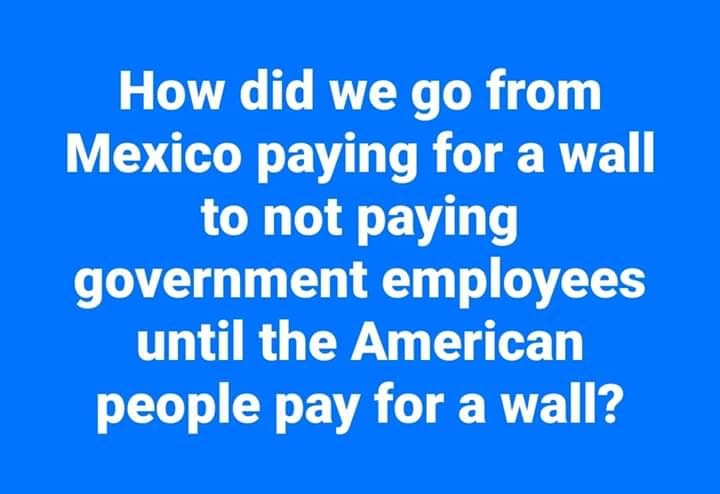
Many of Congress' most conservative Republicans welcomed such a confrontation, but most GOP lawmakers wanted to avoid one because polling found the public opposed the wall and a shutdown over it.
If this does go into the next Congress with no resolution in sight, I suspect the first thing that will happen is that something very much like the Senate passed bill will be put on the floor of the House by Pelosi, where it will certainly pass, most likely with a veto-proof majority. (Assuming all the Dems vote for it, they would would only need about one quarter of the Republicans to hit that 2/3 threshold)
Then it will have to go back to the Senate, (Since it will be a new Congress, an new vote will be required) which is where things start to get interesting...
It passed in this Senate unanimously on a voice vote, but that was when the Republican members thought Trump had signed on to it...
The first question is whether McConnell will even bring it to the floor if Trump isn't on board. Then if he does, the next question is if there would be enough GOP votes to provide the the 2/3 margin...
The answers to these two questions will depend in large measure on how badly Trump and the GOP are being beat up in the polls over the shutdown. It will also provide an early test of Trump's clout with the Senate in the wake of the midterm election reversals and his own lowering popularity numbers...







 ]
]

 ]
]