US election 2012: How to run for president
The US presidency is described as the world's hardest job and the election campaign is said to be its toughest job interview. How do you run for president? BBC News explains the process.
The early stages
A politician with presidential ambition usually forms an exploratory committee to test the waters and raise money. This can begin up to two years before the election.
The US constitution requires only that a person be a "natural born citizen" of the US, at least 35 years old, and a resident of the US for 14 years.
But not just anyone can credibly stand for election: In the last 70 years, every non-incumbent major party presidential nominee has been either a sitting or former US senator, governor, vice-president or five-star general.
If the candidate attracts significant favourable notice from the news media, party officials, prospective campaign strategists, and donors, he or she formally declares his or her candidacy and launches campaigns in key early states.
Barack Obama's campaign began to coalesce in late 2006 and he formally declared he was running in February 2007.
Mitt Romney, meanwhile, has essentially been running for president for nearly five years.
Having failed to capture the Republican nomination in 2008, Mr Romney quietly maintained a behind-the-scenes campaign through the first two years of Mr Obama's term in the White House and formally declared his candidacy for the 2012 nomination in June 2011.
The nomination fight
Typically - but not always - they spend the next several months campaigning heavily in the early primary and caucus states of Iowa, New Hampshire and South Carolina.
Those states hold the first contests of the campaign in the January before the election, and good performances there can make or break a candidacy.
In the Q&A: US primaries and caucuses, voters in each of the 50 states, plus Washington DC and some US territories, select party delegates who in most cases pledge to support a particular candidate.
Some states use a caucus - a local meeting system - rather than primaries.
The primary election campaign lasts until about June, by which point one candidate has amassed enough delegates to win the nomination or has driven every other contender from the race.
The party convention
The national party conventions are held in the late summer about two and a half months before the election.
There, the parties formally nominate the candidates chosen by party voters in the state primaries and caucuses.
Before or at the convention, the nominee picks a running-mate, sometimes from among the defeated rivals.
Because the nominee is almost always known before the start of the convention, the conventions are mostly geared toward promoting and celebrating the nominee and laying out the party's message and agenda.
The final lap
After the conventions, the candidates fully square up against each other on the campaign trail, over the airwaves and in widely-viewed debates.
Each spends millions of dollars on advertising and a major flurry of state-by-state campaigning.
This year, there will be three debates between the presidential candidates and one between the vice-presidential candidates, according to the Commission on Presidential Debates.
In the final weeks, the contenders typically concentrate their attention on big so-called "battleground" states, where the electorate is more or less evenly divided and hence the outcome is uncertain.
Hordes of campaign volunteers and paid staff converge on the key states, where they work the telephones and go door to door to try and persuade voters to go to the polls to support their candidate.
Watch for the candidates to blanket the airwaves with adverts in Florida, Ohio, Pennsylvania and Virginia.
The election
American presidential elections are always held on the first Tuesday after the first Monday in November. This year, it is 6 November.
Voters do not, technically, participate in the direct election of the president.
They choose "electors", who are pledged to one or another candidate, in a process known as the Uelectoral college.
Each state has a certain number of electors to the college, based on the size of its population.
In almost every state, the winner of the popular vote gets all the electoral college votes in that state.
Because of this system, a candidate can take the White House without winning the popular vote, such as in the 2000 contest between George W Bush and Al Gore.
The inauguration
In the days and weeks after the election - if the vote is decisive - the victor will assemble a cabinet and begin crafting a more thorough policy agenda.
Meanwhile, the departing "lame duck" president works to shape his legacy and begins packing up his belongings.
Under the US constitution, the president is inaugurated on 20 January of the year following the election.
Congratulations!
You won!
For your efforts, you become a virtual prisoner in the White House, unable even to walk across the street without a contingent of Secret Service agents and a gaggle of aides.
You will have to endure 24-hour scrutiny and criticism of your every word and action, surround yourself with aides planning tell-all memoirs and scheming among themselves for power, and work 12-hour days in which your schedule is planned almost down to the minute.
Expect a constant battle with a hostile news media and an opposition party dedicated to frustrating and impeding your every move, from your grand economic agenda to your lowest appointments.
Only difficult decisions reach your desk - the easy ones have all been answered at lower levels of your administration.
But you will have the chance to put your personal stamp on a country of 308 million people and indeed on the entire world.
You will shape its economy, culture and society, and win a chapter for yourself in the history books alongside George Washington, Abraham Lincoln, Franklin Roosevelt, Ronald Reagan and other American luminaries.
How to run for President (For us Foreigners)
How to run for President (For us Foreigners)
“If you trust in yourself, and believe in your dreams, and follow your star. . . you'll still get beaten by people who spent their time working hard and learning things and weren't so lazy.”
Re: How to run for President (For us Foreigners)
This is a pretty good - though at times sarcastic - summary.
I'd take issue with one statement, to wit, "The primary election campaign lasts until about June, by which point one candidate has amassed enough delegates to win the nomination or has driven every other contender from the race.'
Although this has generally been the case in recent elections, it is not a certainty, and indeed in this election cycle there is a real possibility that it will not happen. And one must keep in mind that the delegates that have been "won" during the caucuses and primaries are only obliged to vote for that candidate on the FIRST BALLOT. After that, they can vote according to their own best judgment. So if no candidate wins on the first ballot, it is a wide-open affair. And the Republicans have at least three strong non-candidates who might become viable if there is no first ballot winner. I personally would put a Jeb Bush presidency at no worse than 20-1 right now. Wouldn't that throw the Europeans into a tizzy?
Also, it might not be fair to exclude the remote possibility of a non-politician winning, from a third party. Our self-exalted Mr. Donald Trump believes that he could - and might - enter this race if the republicans don't nominate someone of whom he approves. And who knows? Maybe he could win.
I'd take issue with one statement, to wit, "The primary election campaign lasts until about June, by which point one candidate has amassed enough delegates to win the nomination or has driven every other contender from the race.'
Although this has generally been the case in recent elections, it is not a certainty, and indeed in this election cycle there is a real possibility that it will not happen. And one must keep in mind that the delegates that have been "won" during the caucuses and primaries are only obliged to vote for that candidate on the FIRST BALLOT. After that, they can vote according to their own best judgment. So if no candidate wins on the first ballot, it is a wide-open affair. And the Republicans have at least three strong non-candidates who might become viable if there is no first ballot winner. I personally would put a Jeb Bush presidency at no worse than 20-1 right now. Wouldn't that throw the Europeans into a tizzy?
Also, it might not be fair to exclude the remote possibility of a non-politician winning, from a third party. Our self-exalted Mr. Donald Trump believes that he could - and might - enter this race if the republicans don't nominate someone of whom he approves. And who knows? Maybe he could win.
-
Sue U

- Posts: 9218
- Joined: Thu Apr 15, 2010 4:59 pm
- Location: Eastern Megalopolis, North America (Midtown)
Re: How to run for President (For us Foreigners)
Oh please please please please make Donald Trump the GOP nominee!!!!!!dgs49 wrote:Also, it might not be fair to exclude the remote possibility of a non-politician winning, from a third party. Our self-exalted Mr. Donald Trump believes that he could - and might - enter this race if the republicans don't nominate someone of whom he approves. And who knows? Maybe he could win.
GAH!
Re: How to run for President (For us Foreigners)
Sue U wrote:
Oh please please please please make Donald Trump the GOP nominee!!!!!!
Billionaire businessman Donald Trump is set to endorse Mitt Romney for the Republican Party's presidential nomination, US media are reporting.
Mr Trump is tipped to announce his support at his Las Vegas hotel later, contradicting earlier reports that he would back Romney rival Newt Gingrich.
http://www.bbc.co.uk/news/world-us-canada-16861187
“If you trust in yourself, and believe in your dreams, and follow your star. . . you'll still get beaten by people who spent their time working hard and learning things and weren't so lazy.”

Re: How to run for President (For us Foreigners)

For me, it is far better to grasp the Universe as it really is than to persist in delusion, however satisfying and reassuring.
~ Carl Sagan
~ Carl Sagan
Re: How to run for President (For us Foreigners)
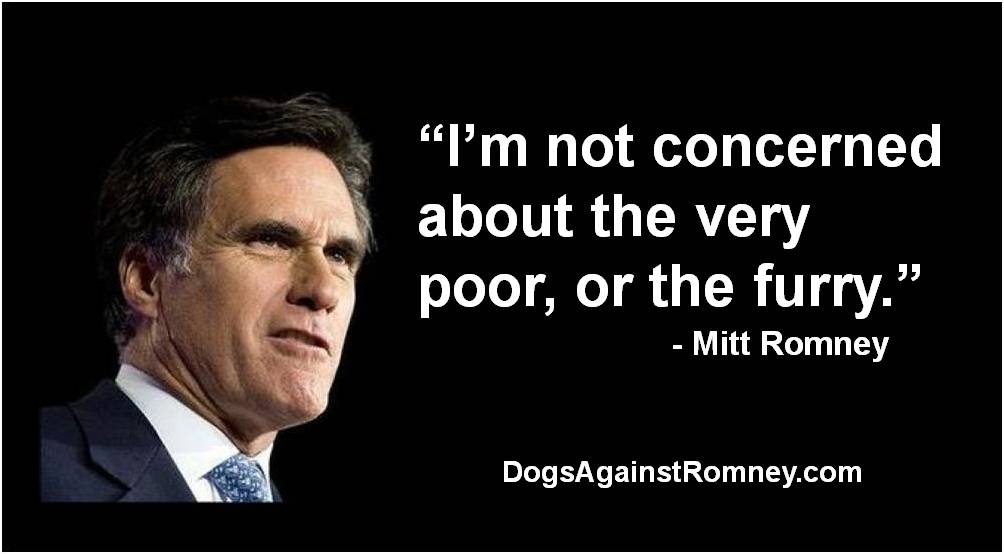
Your collective inability to acknowledge this obvious truth makes you all look like fools.
yrs,
rubato