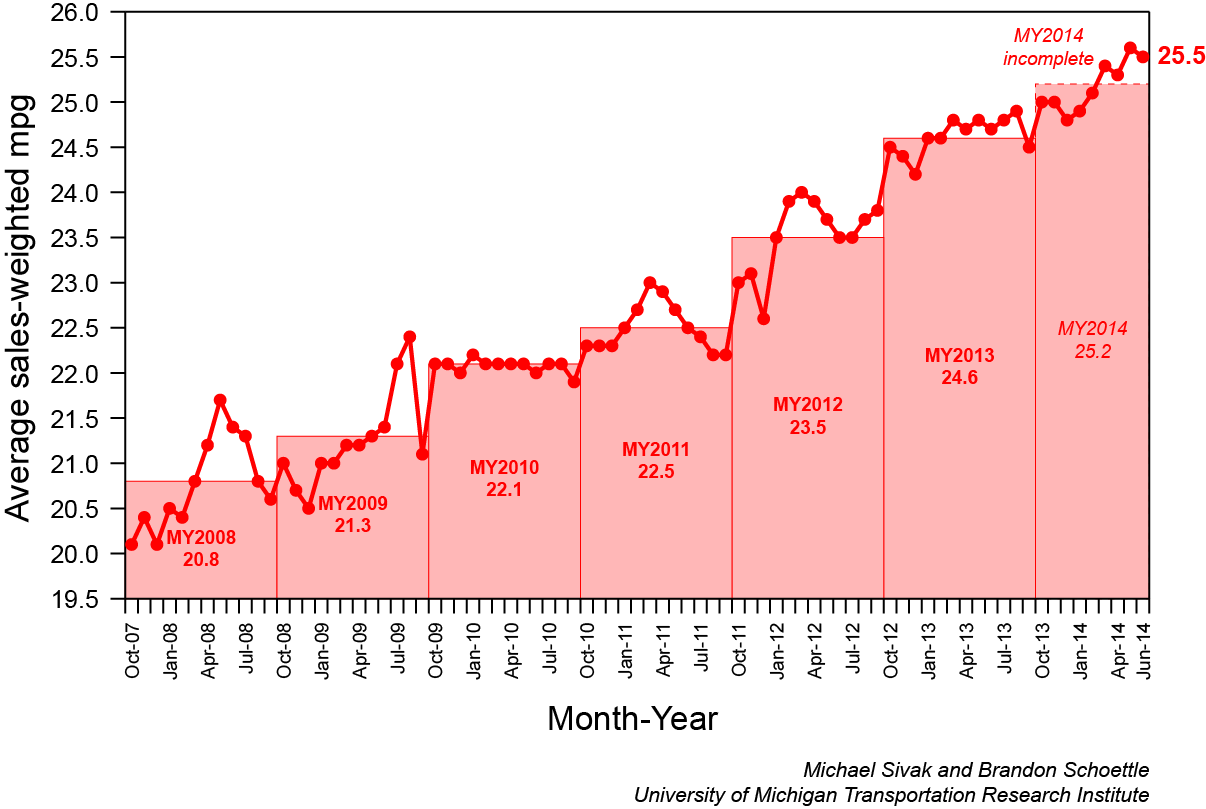
http://www.vox.com/2014/7/3/5867813/car ... -heres-why
This chart is interesting because it shows how mpg was increased so quickly back ca. 1980:
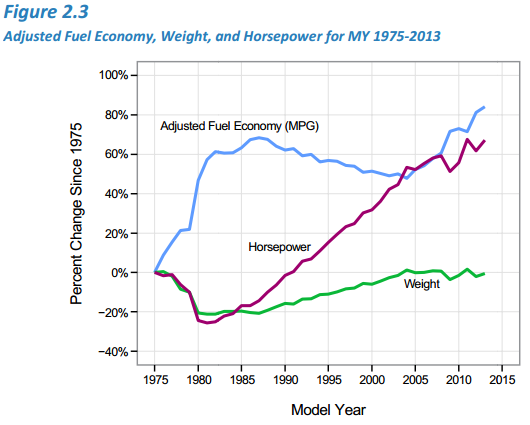
The two big means of improving efficiency without a long research program are to cut weight and reduce horsepower. Less mass is less mass to accelerate over and over again. And the easy way to cut HP is to cut displacement. Less displacement is a smaller volume of air being pulled into the cylinder and less fuel is needed per combustion. By 1984 a 200HP car was a rare thing and there were many cars sold which weighed ca 2,200lbs (the Honda CRX weighed 1,800lbs).
In the decades in-between they have done the slower and more difficult job of making engines more efficient AND more powerful. Today, many cars have 200hp, 300hp isn't really rare and there are few cars which weigh under 3,000lbs, a typical sedan weighs about 3,200 lbs.
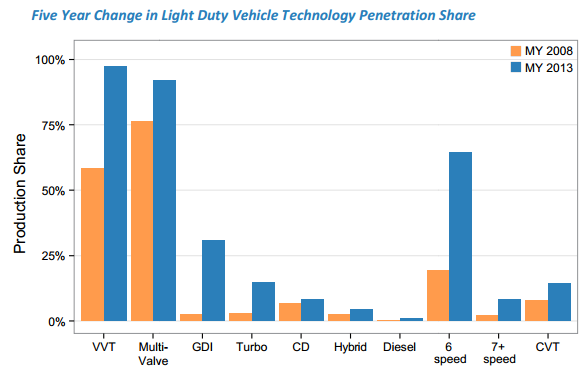
As a sidelight the use of variable valve technology made a big jump in the last 5 years. But I'm surprised there was still that much room for improvement. Honda first introduced it almost 25 years ago with the v-tech engine (followed quickly by Toyota and then BMW)
Great news and good for us.
We can make an even bigger jump by reducing sales of Pickups and SUVs; vehicles which are badly designed for the use they are almost always put to; hauling 1 person plus some shopping. But if we can educate people about the connection between overeating and looking like whales they will no longer need cars designed to transport whale-shaped people. Fitter people will want cars which reflect their sleeker and more agile selves. Another win-win!
yrs,
rubato